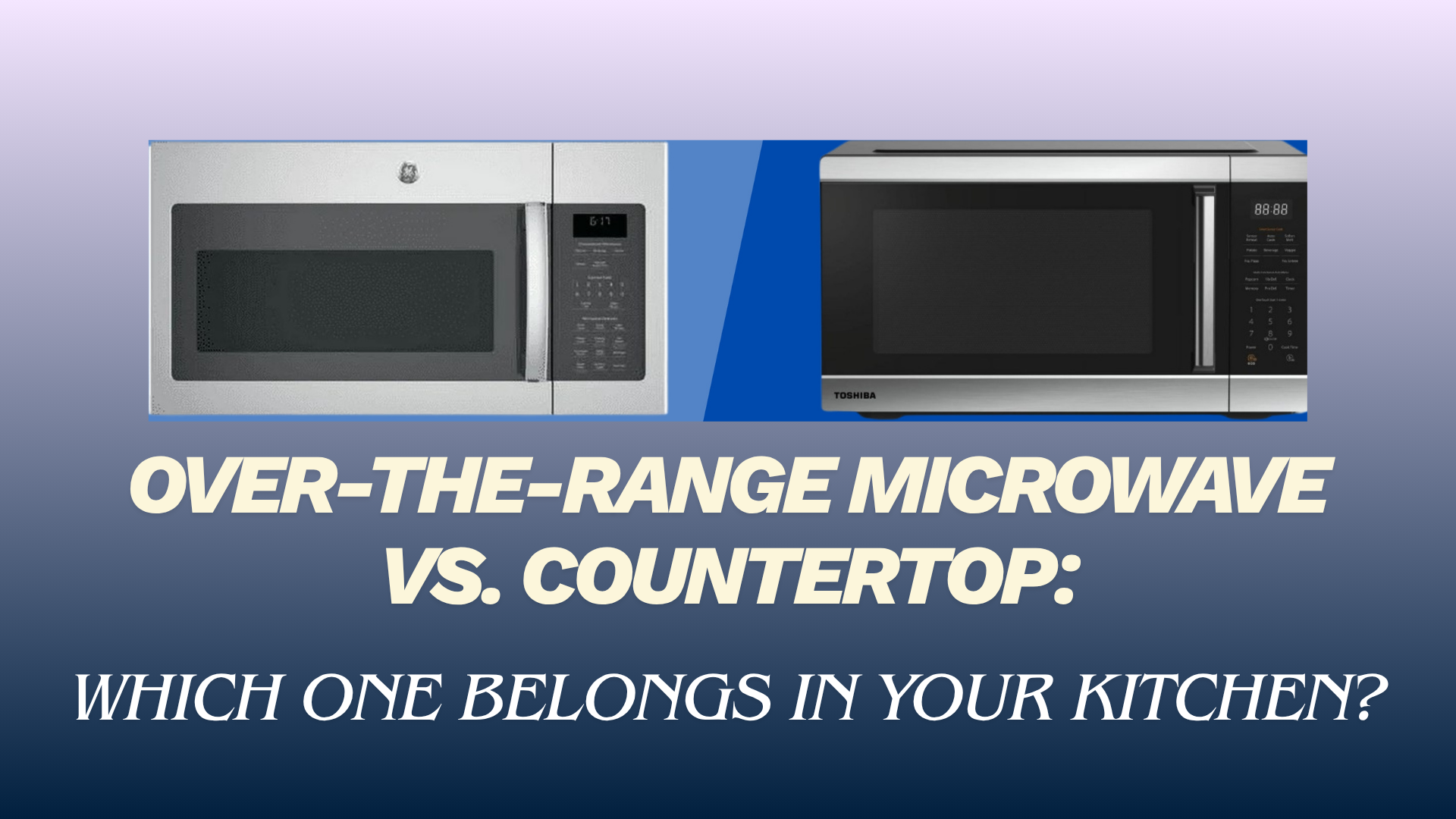

Microwaves feel simple—plug in, heat up, get on with your day. But the choice between an Over-The-Range Microwave unit and a countertop model can shape how your kitchen functions, breathes, and even looks. Below, we unpack the real-world trade-offs: installation, ventilation, safety, ergonomics, capacity, features, costs, and who each style best serves.
Quick note: Appliance Rescue offers expert guides, appliance tips, and troubleshooting advice—not repair services. If you have questions after reading, you can always Contact us.
Snapshot Comparison
| Factor | Over-the-Range (OTR) | Countertop |
|---|---|---|
| Space | Frees up counter space by mounting above the range | Uses counter space; flexible placement |
| Installation | Moderate to complex; may require venting & cabinet mods | Plug-and-play, no construction |
| Ventilation | Built-in vent/hood (recirculating or external) | None (needs a separate range hood) |
| Ergonomics | Reaching up over hot burners, tall users fare better | Eye-level to low-level; easiest access |
| Safety | Steam/heat rising can be awkward for kids/short users | Safer access, especially for reheating liquids |
| Capacity | Typically mid-size; width matches range | Widest variety: compact to XL |
| Features | Often includes task lighting, multi-speed fan | Broad spectrum, sometimes better sensor tech per dollar |
| Price (unit) | Mid to high | Low to high |
| Total Cost | Higher (unit + installation/ducting) | Lower (unit only) |
| Renters | Usually not feasible to install | Ideal for renters |
Space & Layout: Where Will It Live?
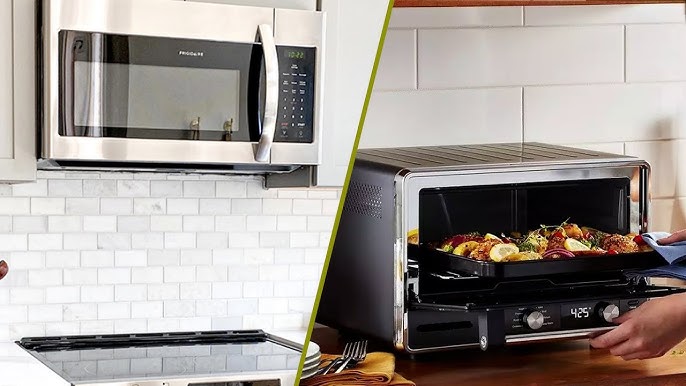
Over-the-range microwave units are designed to reclaim precious countertop space. If your kitchen is compact or you simply dislike clutter, OTR can be appealing. The trade-off is permanence. You’ll commit that location to the microwave and hood combo, and cabinet adjustments or bracketing are often required.
Countertop microwaves consume surface real estate, but they’re far more flexible. You can tuck one into an appliance garage, slide it onto a cart, or redesign your workflow without calling a contractor. For renters or anyone who anticipates moving, portability is a decisive advantage.
Rule of thumb: If every inch of counter matters, OTR helps. If flexibility matters more, countertop wins.
Ventilation: The Hidden Decider
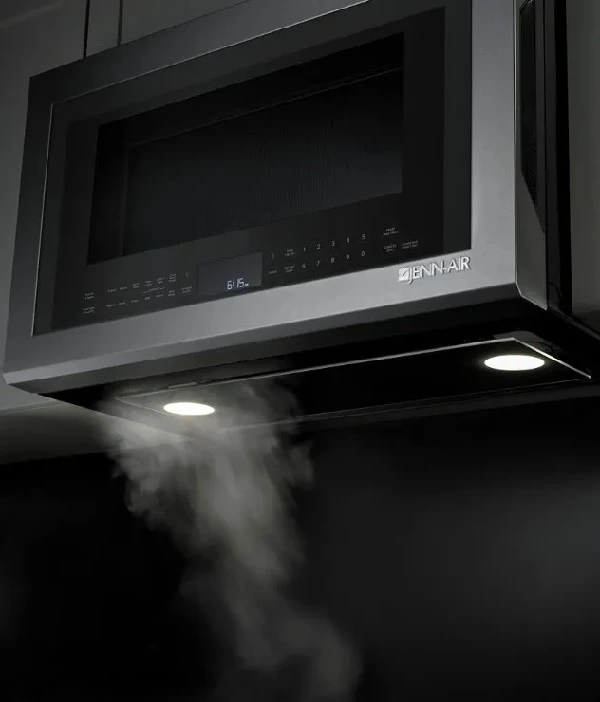
Many OTR models include a ventilation system that either recirculates (through a filter back into the room) or vents externally (ducted outdoors). External venting is more effective for smoke and odor control but may require wall or cabinet modifications.
Countertop units don’t replace a hood. If you cook frequently—searing, stir-frying, or using high-heat techniques—you likely still need a dedicated range hood for strong capture and proper makeup air. If you already have a great hood you love, keeping the hood + countertop microwave combo can deliver superior ventilation without compromises.
Installation & Cost: Beyond the Sticker Price
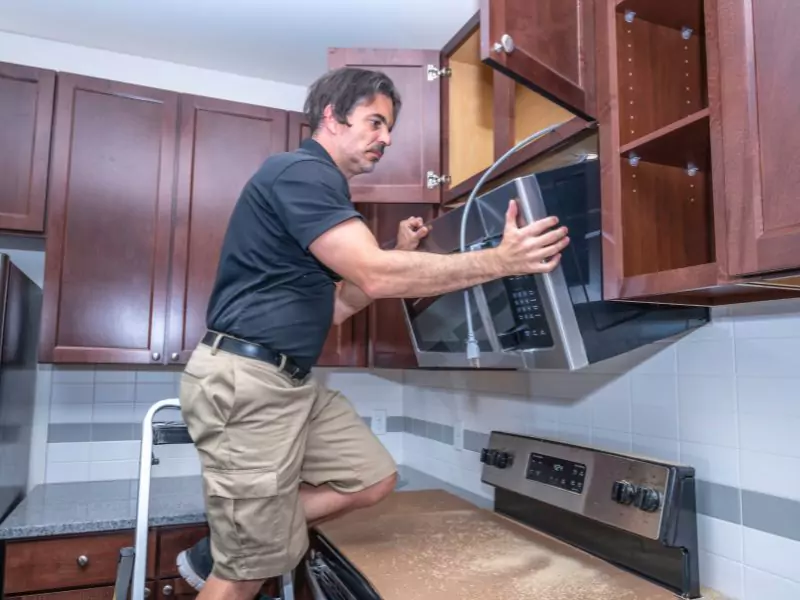
- OTR Microwaves: Expect a higher total cost due to mounting hardware, wall brackets, potential cabinet alterations, electrical adjustments, and (for ducted setups) vent work. DIY is possible for experienced hands but often safer with a pro.
- Countertop Microwaves: Truly plug-and-play. You’ll pay only for the unit. If you later remodel, you can relocate or upgrade with zero construction.
Budget tip: If total cost, not just the retail tag, drives the decision, countertop models usually deliver more features per dollar.
Ergonomics & Safety: Daily Use Details

OTR placement positions hot containers above the cooking surface. That means lifting bowls or mugs down from a height—sometimes while standing over active burners. Tall users may be comfortable, but shorter users and kids can struggle with visibility and reach, increasing the risk of spills. Steam rising from the range can fog the microwave door, and the handle can get warm.
Countertop units sit at safer heights. Eye-level viewing reduces boil-overs and mishandling. For households with children, seniors, or anyone with limited mobility, countertop accessibility is a substantial advantage. If you’re heating soup daily or juggling multiple dishes at dinner, easy reach matters more than you think.
Capacity & Power: How Much—and How Fast?
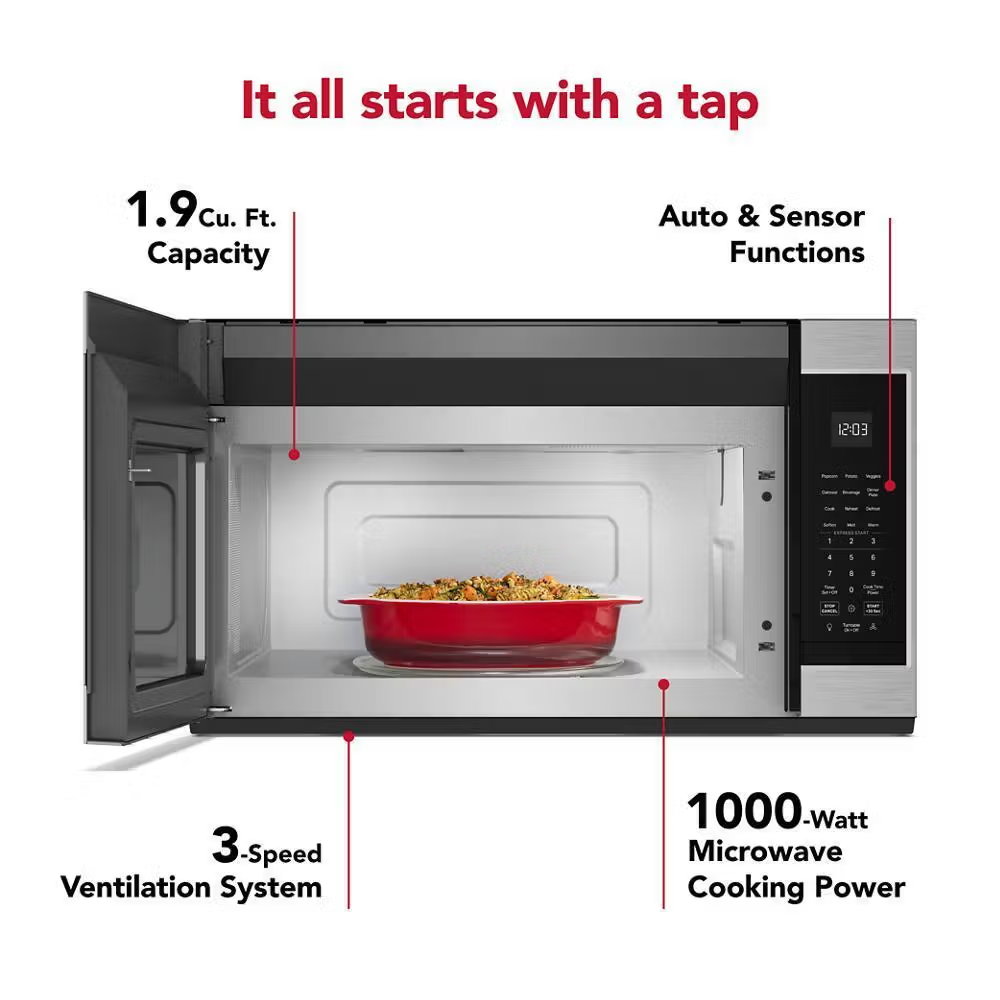
- OTR: Typically standardized widths (to match ranges), with interior capacities that suit reheating, defrosting, and everyday cooking. Power is often in the 900–1,200W range.
- Countertop: Options range from compact dorm-friendly sizes to XL ovens that can handle large casseroles or family-size platters. If you batch-cook or reheat big dishes, the variety is wider here.
Tip: Check the usable interior height and turntable diameter, not just cubic feet. Tall travel mugs and wide bowls can be the real bottleneck.
Features & Smart Tech: What Actually Helps?
Both categories offer sensor reheat, inverter technology (for smoother low-power cooking), melt/soften presets, child locks, and smart connectivity. Because countertop models don’t subsidize ventilation hardware, you’ll sometimes find better cooking features at the same price compared to OTR.
For OTR, look for:
- Strong fan CFM (if you rely on it as your primary hood)
- Effective filters and easy filter access
- Bright, even cooktop lighting
- Low-profile OTR (if cabinet height clearance is tight)
For the countertop, prioritize:
- Inverter or multi-stage power for delicate foods
- Large, stable turntable or flatbed design
- Quiet operation if your kitchen is open-plan
- Smart routines you’ll actually use (voice reheat, routine timers)
Noise & Maintenance

OTR units must juggle microwave duties and ventilation. Fans can be louder, especially on high CFM. Grease filters need periodic cleaning, and recirculating charcoal filters require replacement to stay effective.
Countertop models are simple to clean, easy to replace, and typically quieter. If something fails out of warranty, swapping the entire unit is straightforward and inexpensive compared to uninstalling an OTR.
Aesthetics & Resale
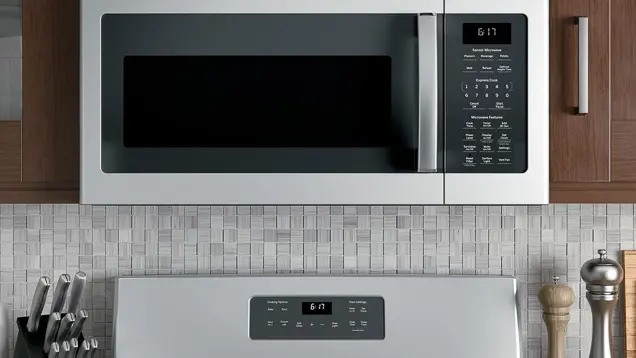
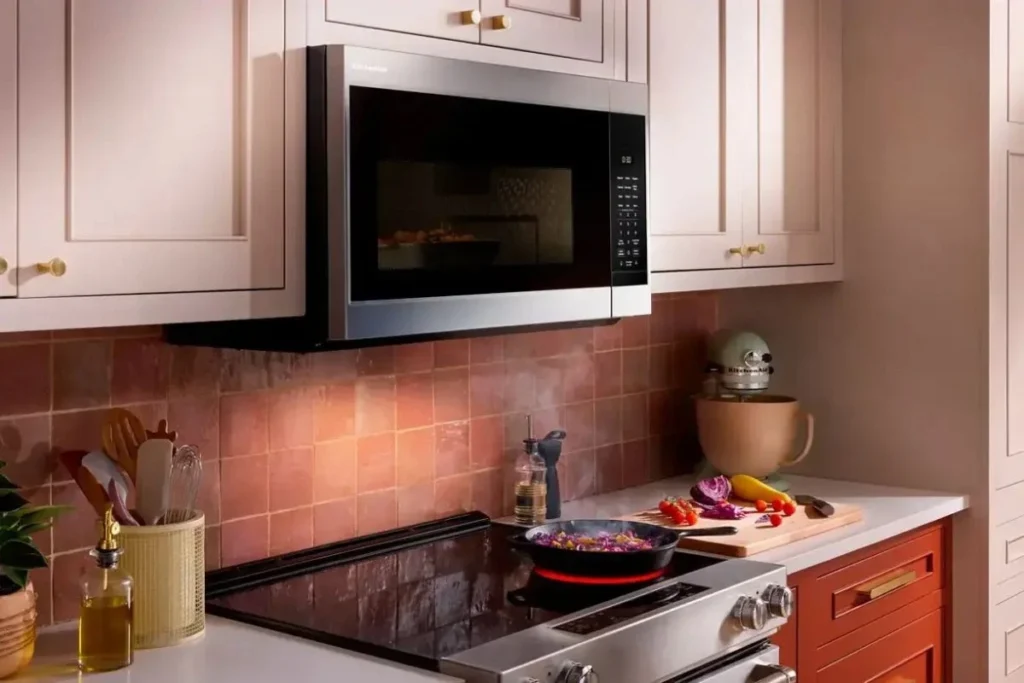
An OTR microwave creates a continuous appliance line with the range, which some buyers find clean and modern. On the other hand, design-forward kitchens increasingly prefer a dedicated hood as a focal piece, paired with a discreet countertop microwave or a built-in microwave drawer elsewhere. If you’re optimizing for resale, consider local norms and the overall style of your home.
Who Should Choose What?
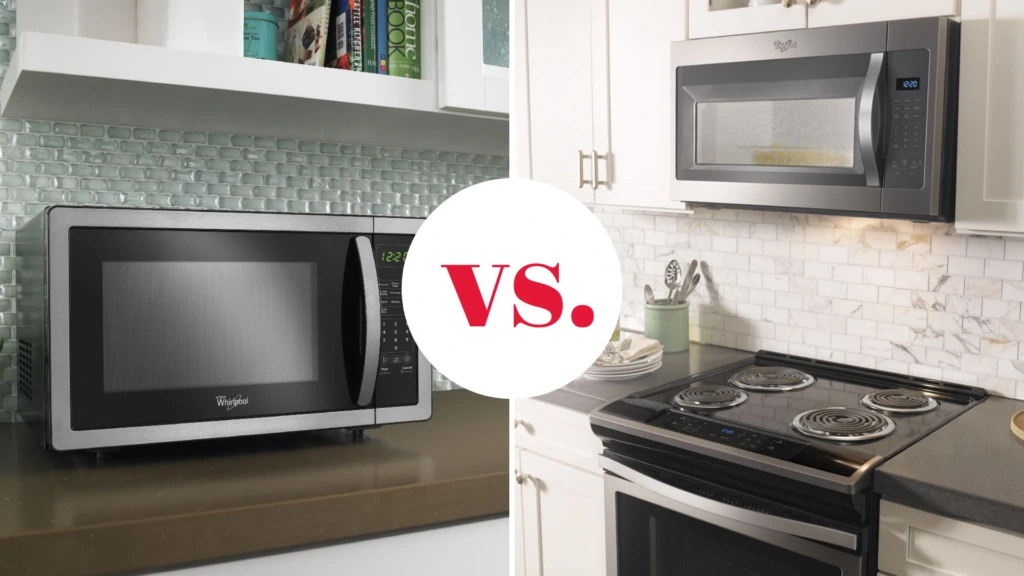
Choose Over-the-Range if you:
- Need to reclaim counter space in a small kitchen
- Don’t perform heavy, smoky cooking (or will duct externally)
- Prefer an integrated look with task lighting above the range
- Are you comfortable with installation or hiring a pro
Choose Countertop if you:
- Want maximum flexibility (renters, frequent movers, evolving layouts)
- Prioritize ergonomics and safety for kids or shorter users
- Already own (or want) a strong, dedicated range hood
- Want the best features per dollar and simple replacement
Practical Buying Checklist

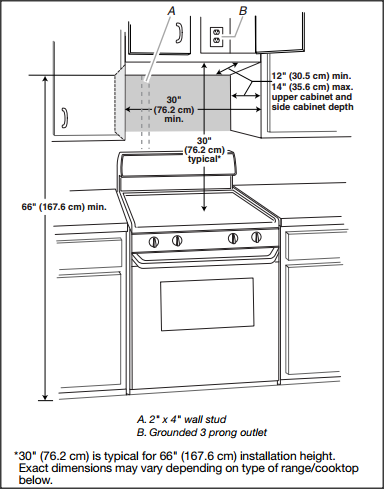
- Measure twice: Cabinet height, depth, and clearance (OTR) or available counter footprint (countertop).
- Vent plan: Decide between recirculating vs. ducted (OTR) or separate hood (countertop).
- Interior fit: Confirm your tallest mug and widest bowl actually fit.
- Lighting & noise: OTR task lighting brightness, fan noise on high; countertop hum in open spaces.
- Power & controls: Look for inverter tech, intuitive controls, and a readable display.
- Maintenance: Ease of cleaning, filter access (OTR), and availability of replacement parts.
- Total cost: Unit + install/ducting (OTR) vs. unit only (countertop).
Bottom Line
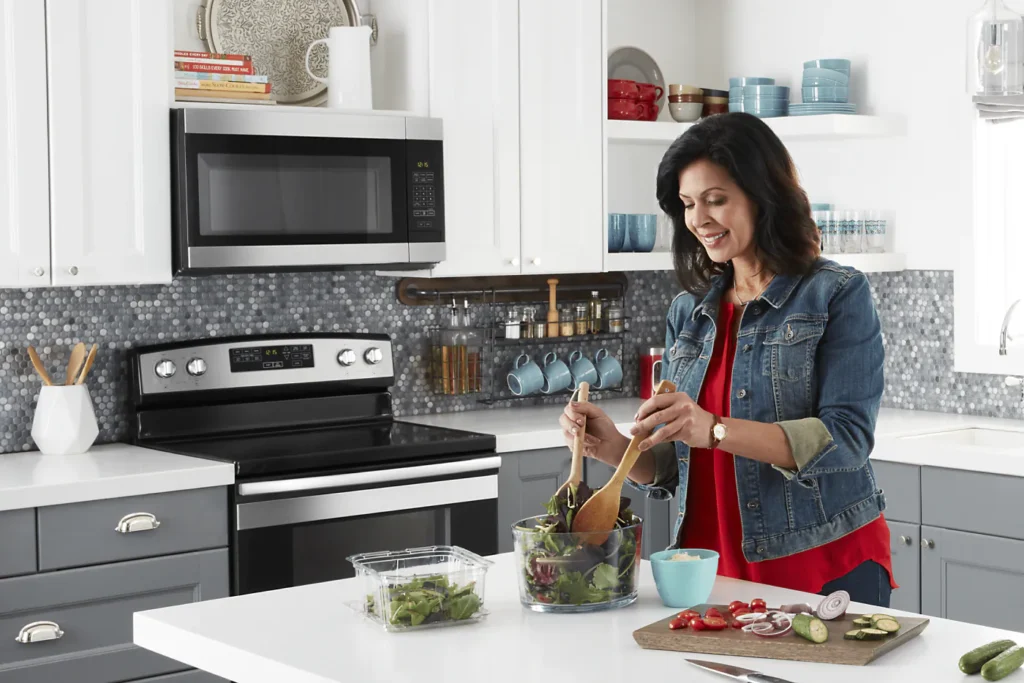
If your kitchen is compact and you want a tidy, all-in-one solution, an over-the-range microwave can make sense—especially with proper external venting. But if you prize flexibility, safety, and value, a countertop unit + a good range hood is the most adaptable setup. Your cooking habits and space constraints should decide it, not trends.
For more step-by-step buying tips and troubleshooting guides (again, not repair services), explore Appliance Rescue. And if you’re weighing a specific layout or model and want a second opinion, feel free to Contact us—we’re happy to help you think it through.