

Should You Repair or Replace Your Dishwasher? Key Factors to Consider
Dishwashers fail in two ways: suddenly (a puddle on the floor, an error code mid-cycle) or slowly (dishes aren’t quite clean, the door sticks, cycles take forever). When that happens, you face the classic question—repair or replace? This guide walks you through a practical, homeowner-friendly framework to reach a confident decision.
Quick note: Appliance Rescue does not provide repair services. We publish Expert Guides, Appliance Tips, and Troubleshooting Advice to help you make smart, safe choices. If you’d like to share feedback or suggest topics, feel free to Contact us.
A simple starting point: the 50% rule
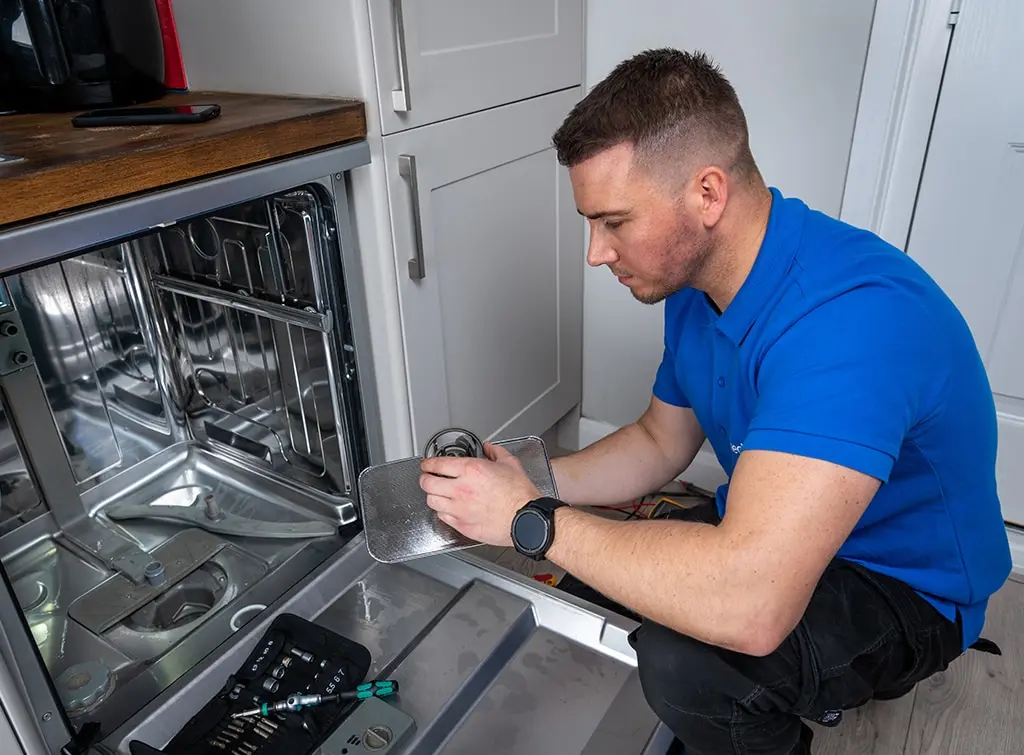
A widely used rule of thumb says: If the repair will cost more than 50% of the price of a comparable new dishwasher—and your unit is halfway or more through its expected lifespan—replacement usually makes better sense.
- Estimate repair cost. Include parts, labor, trip fees, and any follow-up visits.
- Price a comparable new model. Compare similar capacity, noise level (dBA), and feature set.
- Consider age. The typical dishwasher lifespan is about 10 years (some last longer with good water quality and maintenance). If your unit is 6+ years old and the repair is significant, replacement often wins.
This is a heuristic, not a law—but it keeps decisions grounded.
Common symptoms and what they usually mean
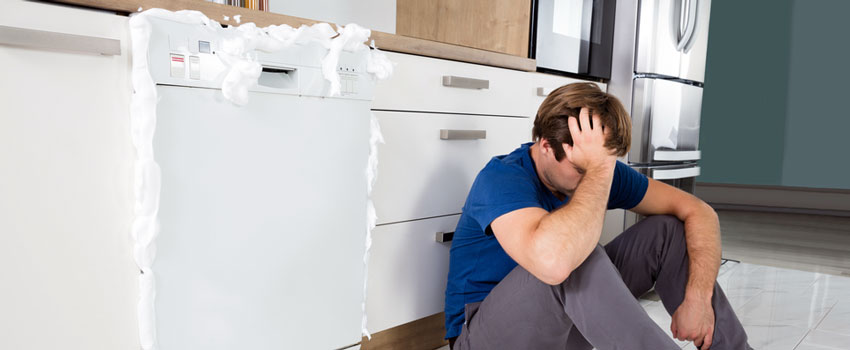
1) Dishes aren’t getting clean
- Likely causes: Clogged spray arms, worn circulation pump, failing heating element, incorrect detergent, hard-water scale, or a dirty filter.
- Repair or replace? Start with DIY maintenance (clean the filter/spray arms; run a dishwasher cleaner; switch to a high-quality detergent and rinse aid). If performance remains poor and the pump or motor is failing—especially on an older unit—replacement may be more economical.
2) Water leaks
- Likely causes: Door gasket wear, loose hose clamps, cracked inlet valve, or tub damage.
- Repair or replace? Replace immediately if the tub is cracked (non-economical to fix). For gasket or hose issues, repairs are usually minor and worthwhile—unless age and other problems stack up.
3) Won’t drain or leave standing water
- Likely causes: Clogged filter, blocked drain hose/air gap, failed drain pump.
- Repair or replace? Try DIY checks first (filters, kinks, blockages). If the drain pump is bad, it’s a moderate repair; weigh cost vs. age.
4) No power or frequent error codes
- Likely causes: Control board (PCB), door latch switch, wiring issues.
- Repair or replace? Control board replacements can be pricey and, on older machines, push you toward replacement—especially if other parts show wear.
5) Excessive noise or grinding
- Likely causes: Worn circulation pump bearings, debris in the chopper blade, misaligned racks.
- Repair or replace? If it’s just debris or alignment, repair. A noisy main pump on an aging unit usually tips toward replacement.
Factor-by-factor decision checklist

Age & remaining lifespan
- 0–4 years: Lean repair—many issues are single-part fixes.
- 5–7 years: Case-by-case—evaluate cost, parts availability, and reliability history.
- 8–10+ years: Lean replacement—efficiency gains and the risk of cascading failures grow.
Total cost of ownership
Account for repair cost today + likely future repairs + higher utility costs from older machines. A new Energy Star dishwasher can use less water and electricity, saving money over time—especially if you run it daily.
Parts availability and brand ecosystem
If OEM parts are scarce, discontinued, or unusually expensive, replacement becomes more practical. Conversely, brands with widely available parts and clear service documentation keep repair in play.
Efficiency & features you might want now
Modern units offer:
- Quieter operation (down into the low 40s dBA in premium models).
- Soil sensors that optimize cycle time and water usage.
- Stainless steel tubs (better drying, odor resistance).
- Third racks for flatware and utensils, improving capacity and organization.
If your current machine lacks features you’d regularly use, a replacement adds value beyond the fix.
Warranty and consumer protections
- Still under manufacturer or extended warranty? Start there; you may be covered.
- Credit card purchase benefits? Some cards extend manufacturer warranties—worth checking your original receipt.
Your household rhythm
If you run the dishwasher daily, downtime matters. A single, large repair that doesn’t fully restore reliability can be more disruptive (and costly) than a clean slate with a new, dependable unit.
When repair is typically the better choice

- Younger machine (<5–6 years) with an otherwise clean performance history.
- Low-cost, single-component fixes: door gaskets, float switches, inlet valves, filters, spray arms, latches, simple sensors.
- Cosmetic or minor usability issues: rack wheels, cutlery basket swaps, kick-plate clips.
- Hard-water performance issues respond to descaling and routine maintenance.
Quick DIY checks before you spend
- Clean the filter and spray arms; remove trapped food or mineral scale.
- Check detergent type/amount; pair with rinse aid if you have hard water.
- Inspect the drain path (filter → sump → drain hose → air gap/garbage disposal).
- Level the unit; an unlevel dishwasher can leak or underperform.
- Run a cleaner cycle with a dishwasher-specific cleaner to dissolve grease/scale.
- Power cycle and confirm the door latch engages properly.
These steps solve a surprising number of “replacement-level” complaints.
When replacement is usually smarter

- Cracked tub or significant internal rust/corrosion.
- Control board failure on a 7–10-year-old unit, especially paired with a tired pump or heater.
- Multiple failures appearing within a year (a sign the machine is nearing end-of-life).
- Safety issues: persistent leaks damaging cabinetry/flooring, tripping breakers, or overheating smells.
- Inefficient, noisy model where a new Energy Star unit will materially cut your utility bills and noise level.
Cost ranges (to frame expectations—not quotes)

Prices vary by brand, region, and labor rates, but here’s a helpful orientation:
- Minor parts (gaskets, float switch, door latch, rack wheels): typically low cost.
- Drain pump or inlet valve: moderate cost.
- Circulation pump/motor assembly: moderate to high cost.
- Heating element: moderate cost.
- Main control board (PCB): high cost on many models.
- Installed new dishwasher: ranges widely; factor in delivery, haul-away, installation kit, and any plumbing/electrical adjustments.
Use these categories against the 50% rule and the unit’s age to guide your call.
Environmental angle: repair vs. replace

- Repair benefits: Extends product life and reduces e-waste. If the repair is straightforward and the machine has years left, repair is the greener choice.
- Replace wisely: If replacement is necessary, pick an efficient model, and arrange responsible recycling of the old unit. Many retailers offer haul-away programs.
Shopping tips if you choose to replace

- Noise (dBA): Under 50 dBA is pleasantly quiet; 44–46 dBA feels whisper-level.
- Third rack & adjustable tines: Increases flexibility and usable capacity.
- Stainless steel tub: Better drying and durability than plastic.
- Auto/sensor cycles: Save time and water; look for soil sensors.
- Filter type: Manual filters are common and easy to clean; grinder systems are louder and rarer today.
- Reliability, reputation & parts support: Research reviews that discuss multi-year performance, not just week-one impressions.
Maintenance that meaningfully extends life

- Monthly: Clean the filter; inspect spray arms; wipe the door gasket.
- Quarterly: Run a cleaning cycle with a descaling cleaner—more often with hard water.
- Always: Rinse large food scraps (no need to pre-wash), load to avoid blocking spray arms, and use rinse aid.
- Annually: Check leveling and hose connections; inspect the drain path for buildup.
These habits keep performance high and prevent overworking critical components.
How to decide today (a quick flow)

- Identify the failure and get a rough repair estimate.
- Check age and history. Any major prior repairs? Frequent error codes?
- Apply the 50% rule using the price of a comparable new model.
- Consider efficiency, noise, and features you’d gain with replacement.
- Assess downtime and risk of cascading failures.
- Choose repair for low-cost, single-point fixes on younger units.
- Choose a replacement for cracked tubs, costly PCBs/pumps on older units, or multiple concurrent issues.
Final thoughts

If your dishwasher is younger and otherwise reliable, a focused repair can be the smartest, most sustainable move. If it’s older, inefficient, and facing a major component failure, the math—and your daily sanity—often favor replacement. Either way, making the call systematically will save money and headaches.
Remember, Appliance Rescue offers guides, tips, and troubleshooting advice—not repair services—to help you troubleshoot with confidence and plan your next step. Want to suggest a topic or ask about this guide? Contact us.