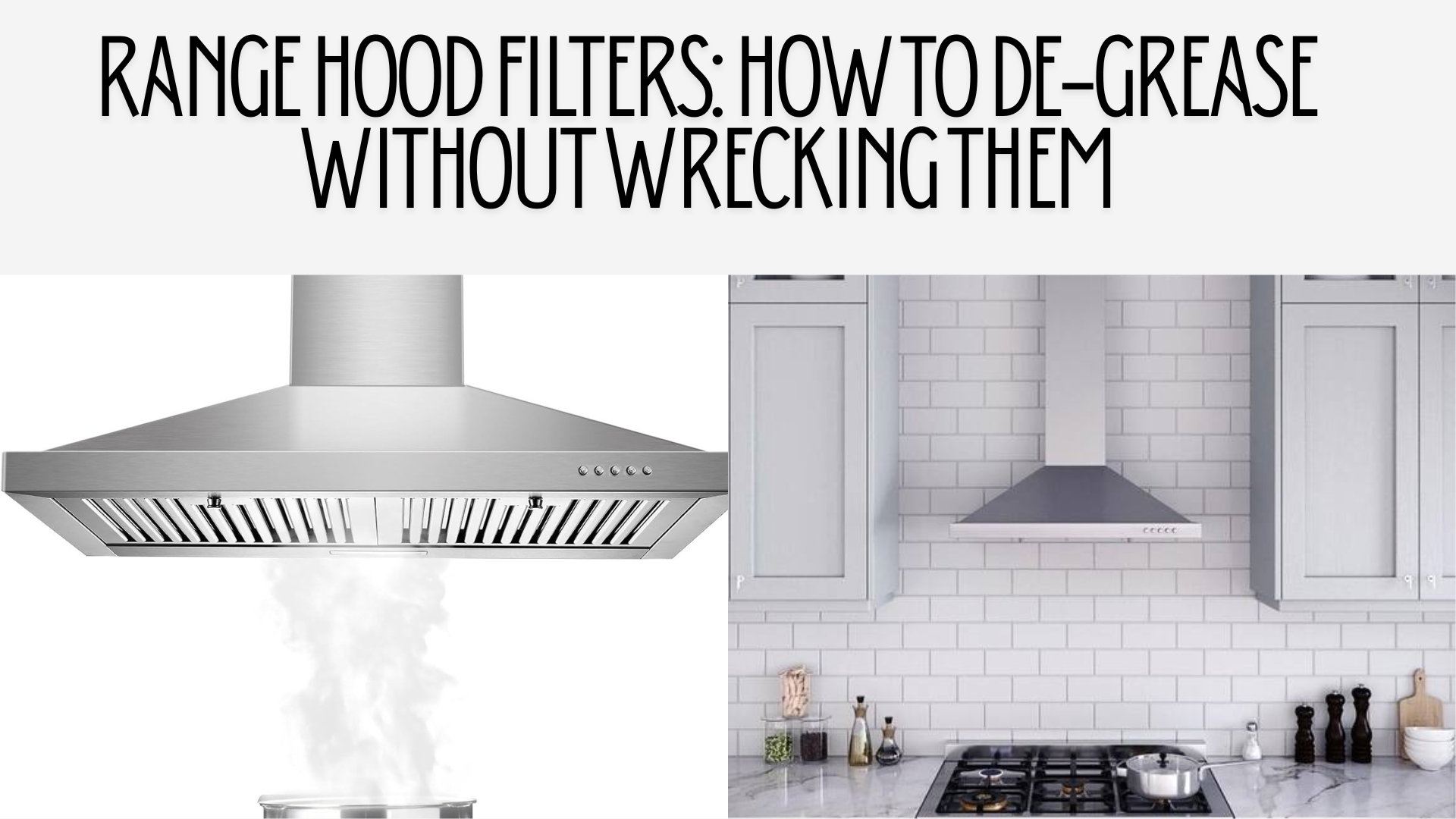

Clean Your Range Hood Filter—Without Damaging It
Cooking without a working range hood is like running a marathon in a parka—heat, humidity, and lingering smells build up fast. Your hood’s first line of defense is its filter, and when that filter gums up with oil, performance drops dramatically. The challenge is getting rid of grease without bending the frame, thinning the metal, or stripping protective coatings. This guide walks you through proven, gentle methods for every common filter type, what to avoid, and how to keep your hood moving air like new.
Note: Appliance Rescue doesn’t offer repair services; the site provides Expert Guides, Appliance Tips, and Troubleshooting Advice to help you do jobs like this the right way. Explore more at Appliance Rescue.
1) Know your filter before you clean it
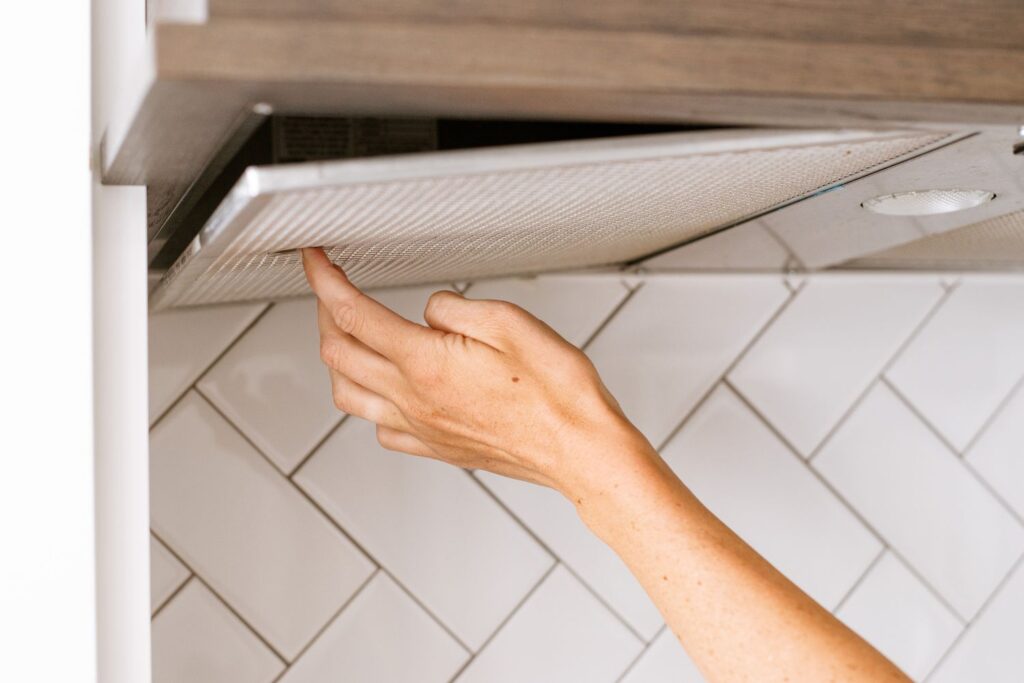
Different filters tolerate different cleaning methods. Start here:
- Aluminum (or stainless) mesh filters
Thin stacked screens inside a metal frame. Light, a bit flexible, and easy to bend if scrubbed too hard. Usually washable. - Baffle filters (stainless or coated aluminum)
Rigid, slotted vanes that trap grease via airflow changes. Durable and dishwasher-safe if the finish is robust. - Charcoal (carbon) filters
Used on ductless/recirculating hoods to absorb odors. Not washable—replace on schedule. If you soak them, they’ll crumble or stop working.
Find the label or manual if you’re unsure. If there’s no documentation, treat it like delicate aluminum mesh and clean it by hand.
2) What actually ruins filters
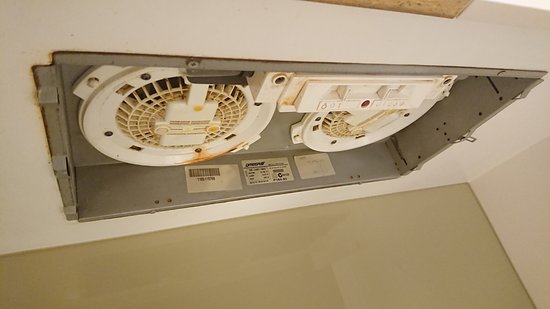
- Boiling water on aluminum. Very hot water can dull or pit aluminum and weaken frame adhesives. Use hot, not boiling.
- Caustic oven cleaners & lye. They strip anodized coatings, discolor aluminum, and can pit metal.
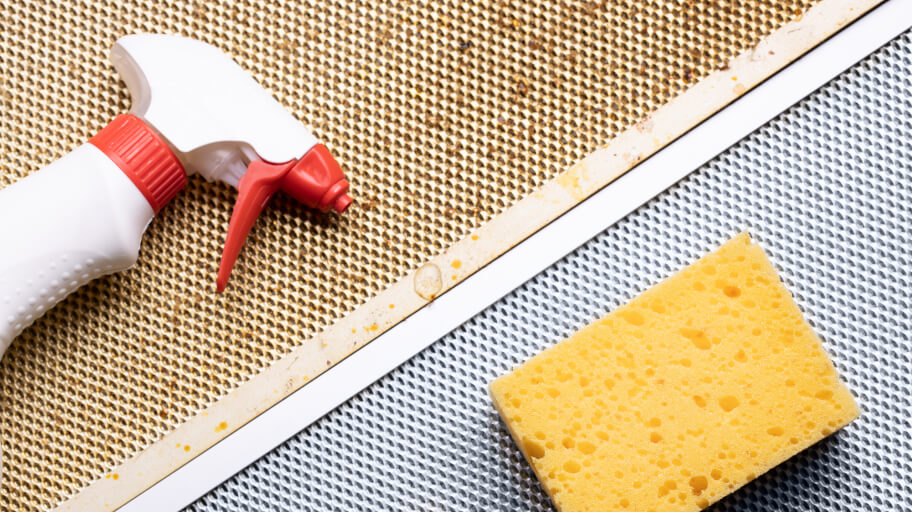
- Abrasive pads and stiff brushes. These snag mesh, distort frames, and scratch baffles.
- Pressure washers. They can warp frames and drive grease deeper.
- Dishwasher chemistry on aluminum. Highly alkaline detergents + heat cycles can darken or erode aluminum over time.
If you value a long filter life, err on the gentle side.
3) Safe, effective degreasing solutions
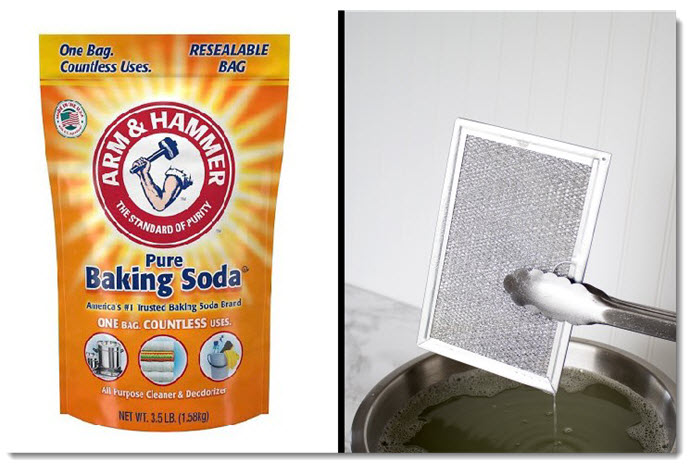
You don’t need exotic chemicals. These combinations cut kitchen grease while being kind to coatings:
- Hot water + mild dish soap (the baseline).
- Baking soda boost (½–1 tbsp per liter): raises pH slightly to break fat bonds without going caustic.
- Citrus-based degreaser (diluted per label): good on stainless baffles; spot-test on aluminum.
- Never mix bleach and ammonia—or bleach with anything besides water.
4) Quick clean (10–15 minutes): for light buildup
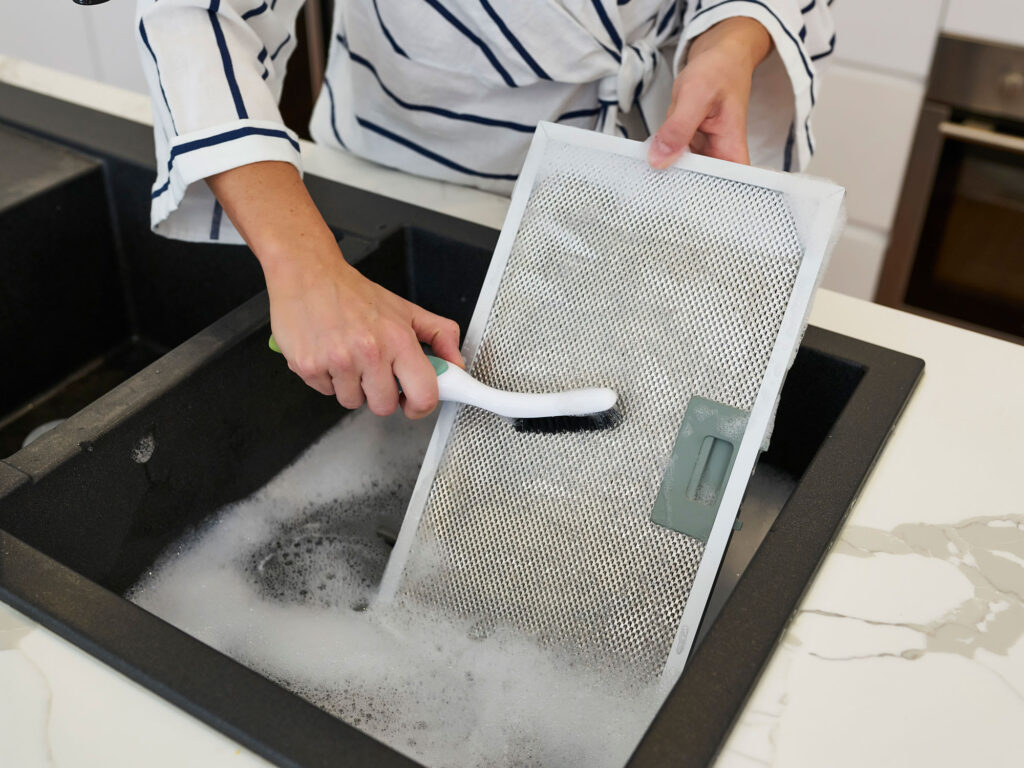
Best for: weekly or bi-weekly upkeep of mesh or baffle filters.
- Remove the filter and note orientation.
- Tap out crumbs into the trash (don’t bang the frame).
- Prepare a basin of hot water + a squirt of dish soap.
- Submerge and soak for 5–7 minutes.
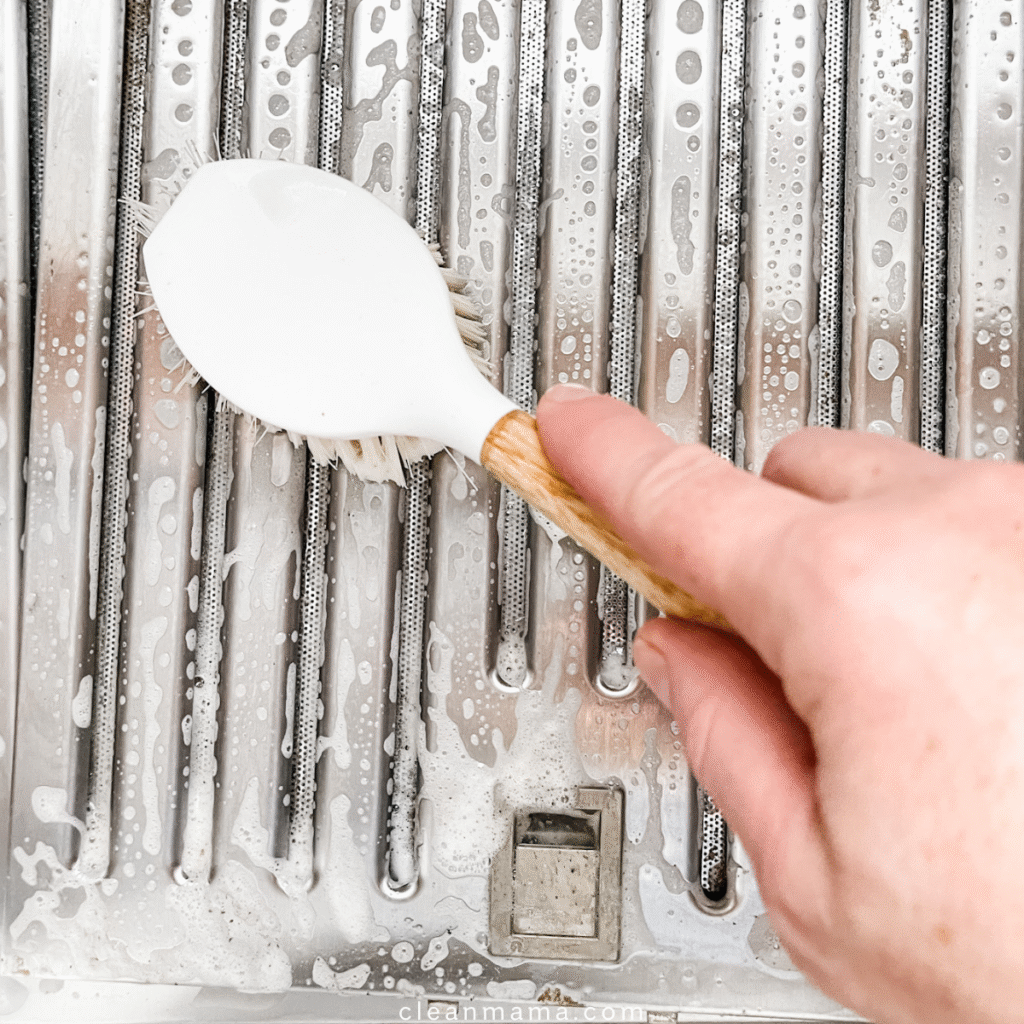
- Agitate gently with a soft nylon brush with the grain. Avoid pushing grease deeper into the mesh.
- Rinse warm until the water runs clear.
- Dry completely (see Section 7) before reinstalling.
5) Deep clean (20–30 minutes): for heavy, sticky grease
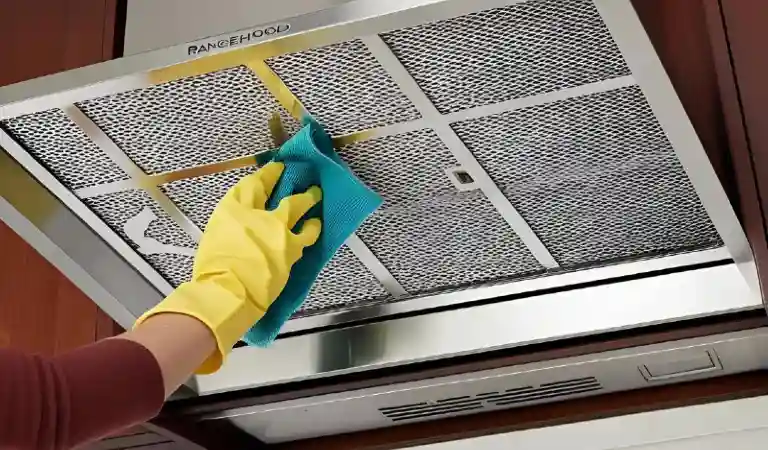
Best for: quarterly resets or after lots of frying.
- Fill a sink with hot water. Add dish soap and 1–2 tbsp baking soda (sprinkle slowly to avoid clumping).
- Soak 10–15 minutes—long enough to loosen, not delaminate.
- Lift and drain, then brush gently. Re-dip as needed.
- Stubborn corners? Use a soft pastry brush or an old soft toothbrush.
- Final rinse with warm water; optional splash of white vinegar to neutralize soap film.
- Inspect: if any mesh strands are lifted, stop scrubbing—further abrasion will widen the snag.
6) The dishwasher question
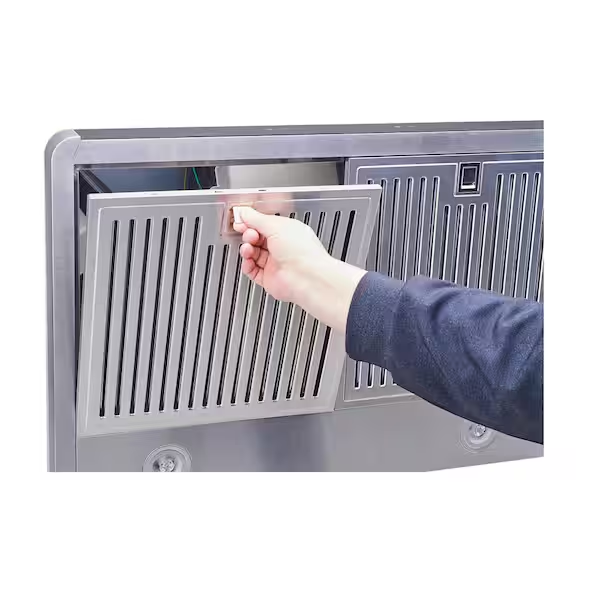
- Stainless baffle filters: Generally safe on the top rack with non-caustic detergent. Expect water spots; they’re cosmetic.
- Aluminum mesh: Proceed cautiously. Occasional cycles may be okay, but repeated alkaline washes can darken aluminum and weaken frame adhesives. Hand-washing extends life.
- Charcoal filters: Do not wash—replace.
If you try the dishwasher, run a short cycle, skip “sanitize,” and air-dry fully.
7) Drying matters more than people think
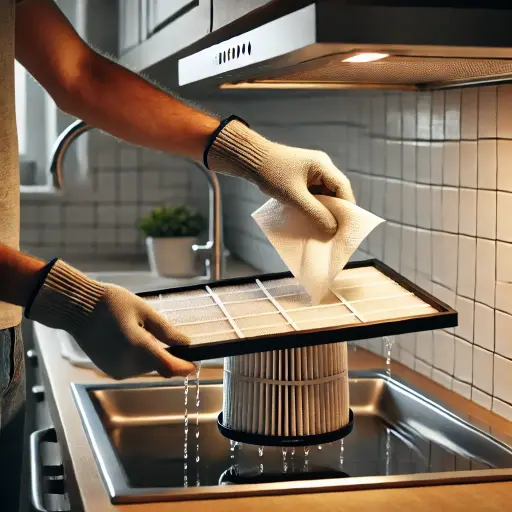
Water trapped in mesh can wick grime back into the filter and streak your hood.
- Shake off excess water over the sink.
- Stand upright on a towel so water drains with gravity.
- Airflow helps: place near a fan or use the hood fan (filter out) for 10–15 minutes.
- Avoid ovens or heat guns—adhesives and coatings don’t love direct heat.
8) Odor control and ductless setups
If your hood vents inside (recirculating), the charcoal filter handles smells. Signs it’s done: persistent odors, smokiness, or visibly saturated pads. Replace every 3–6 months, depending on cooking. Don’t wash it—you’ll ruin the carbon matrix.
9) Preventive habits that slash future grease
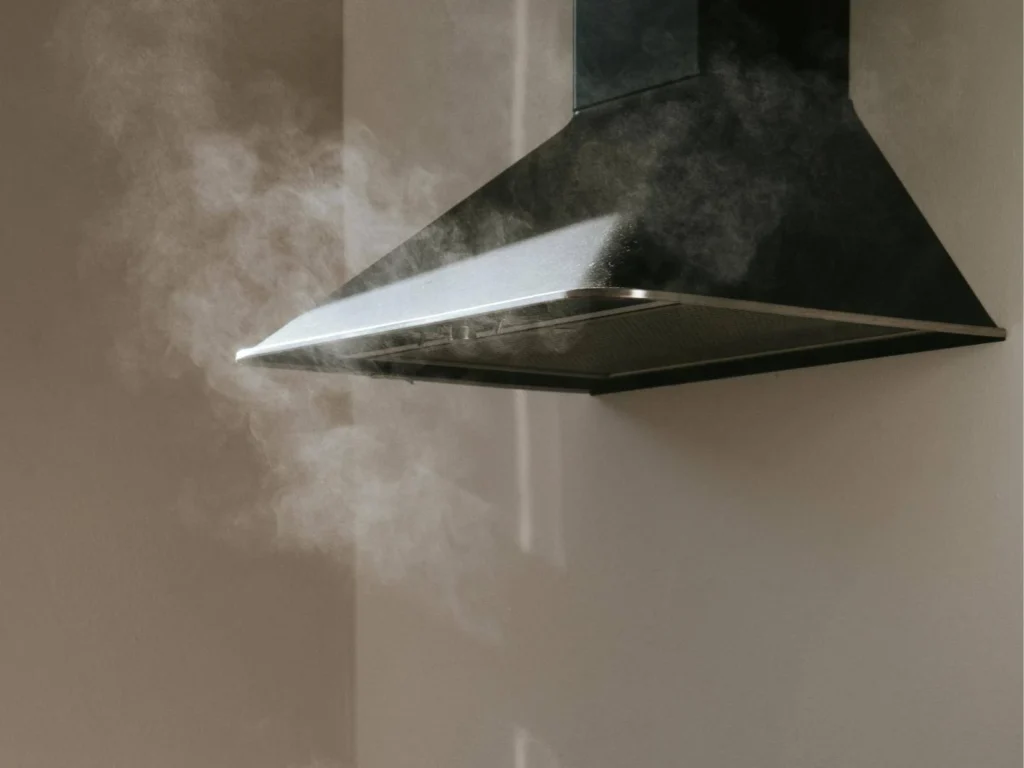
- Pre-heat the hood fan for 1–2 minutes before cooking; moving air catches aerosols early.
- Use back burners when possible; they sit under the high-capture zone.
- Pan lids and splatter screens reduce airborne oil dramatically.
- Wipe the hood’s underside weekly; less drip means less filter re-soiling.
- Light, regular soaks beat heroic deep cleans.
10) Maintenance schedule (simple and realistic)
- Light cooking (boil/steam): Clean filters every 2–3 months.
- Regular sautéing: monthly.
- Frequent frying or wok cooking: every 2 weeks.
- Charcoal filters (recirculating): 3–6 months.
Set a recurring reminder on your phone; future-you will be grateful.
11) Troubleshooting: After cleaning, the airflow still seems poor
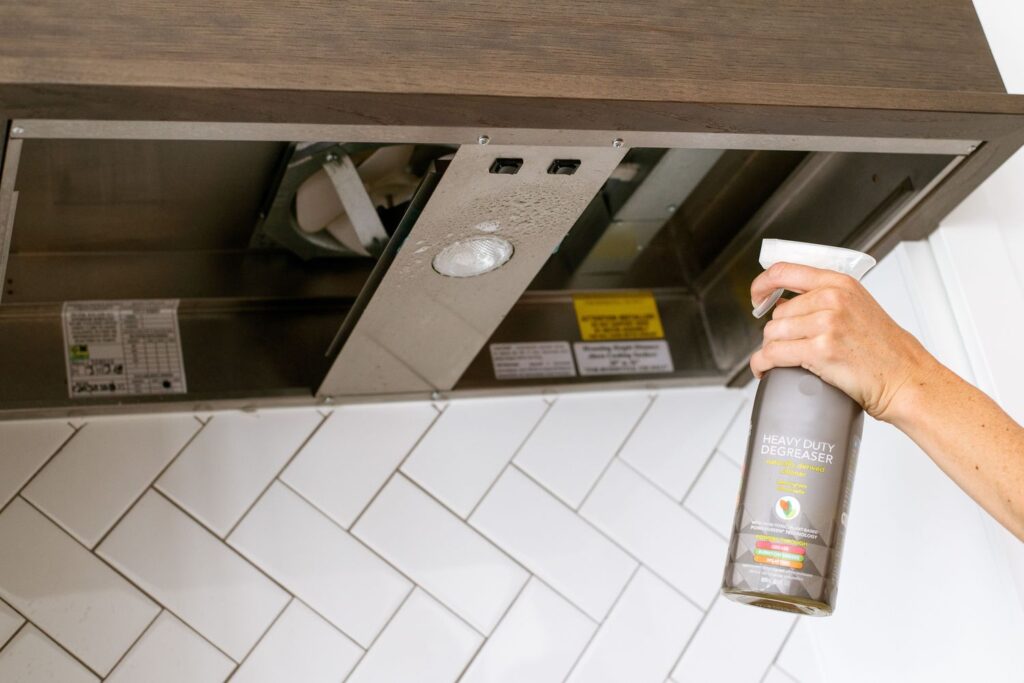
- Check for hidden grease in the hood’s capture panel and the blower intake.
- Inspect the duct (if vented): a crushed or long, winding run kills performance.
- Verify fan speeds: Some hoods default to a lower speed after power loss.
- Gasket or frame warp: a bent filter can leak around edges and reduce capture.
- Charcoal overdue (recirculating): replace it; airflow may feel fine, but odors linger.
12) When it’s time to replace the filter
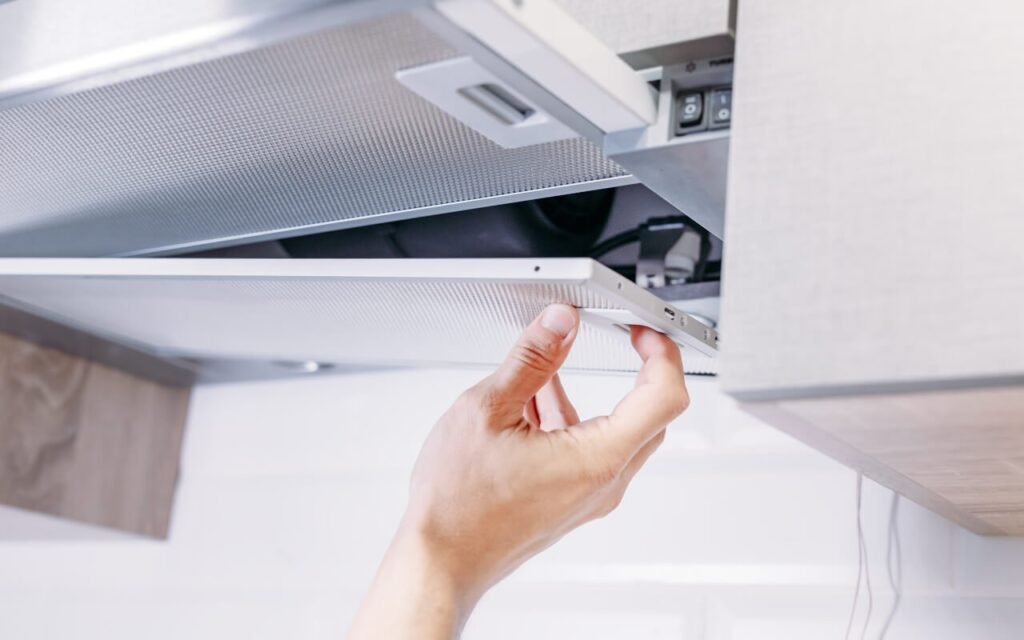
- Frayed or torn mesh strands.
- Warped frames that won’t seat flush.
- Weld points cracked on baffles.
- Persistent odor or oily film immediately after cleaning.
Filters are consumables. Replacing a worn one is cheaper than living with a smoky kitchen or an overworked fan.
13) Quick “do nots” you’ll thank yourself for
- Don’t use oven cleaner, lye, or drain opener on filters.
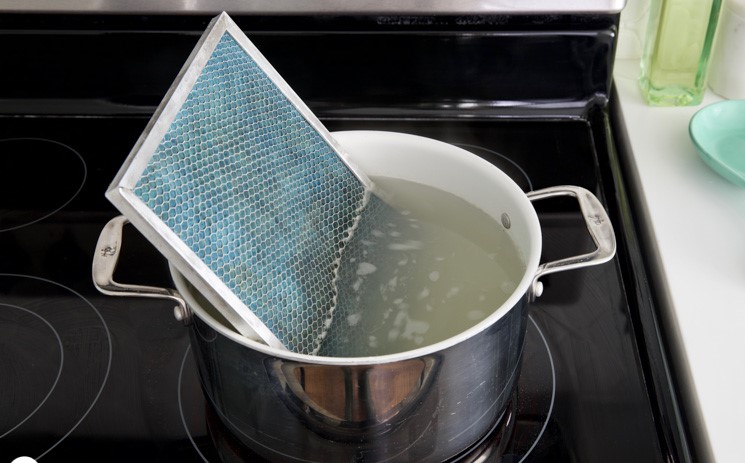
- Don’t boil aluminum filters.
- Don’t attack stains with steel wool or abrasive pads.
- Don’t force-dry with high heat.
- Don’t wash charcoal filters.
14) Recap: the safest path

Use hot water, mild dish soap, and a small dose of baking soda; soak briefly, brush gently, rinse thoroughly, and air-dry fully. Respect material limits (aluminum vs. stainless) and replace charcoal filters on schedule. With that rhythm, your hood will pull its weight and your kitchen will breathe easier.