

The Complete Guide to Appliance Disposal in Vancouver (Fees, Pickup, Rules)
Old fridges, stoves, washers, and other appliances are more than just bulky junk. Many contain metals that can be recycled and—critically—refrigerants that must be captured by certified technicians. Vancouver and the Metro Vancouver region run a network of programs and facilities to keep these materials out of landfill and out of the atmosphere. Getting it right avoids fines, protects workers, and supports the city’s Zero Waste 2040 goals.
The short version (what to do first)
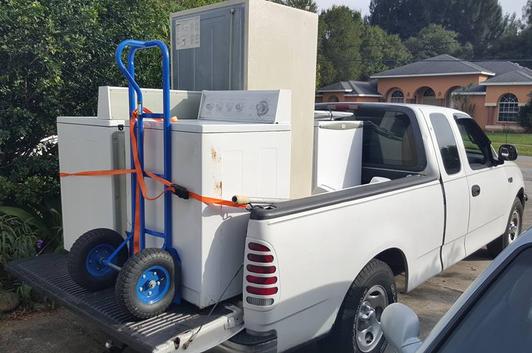
- Decide if you need pickup or can drop off. Vancouver primarily expects residents to drop off large appliances at approved sites; curbside pickup by the City is not the norm for appliances. Start with the City’s Waste Wizard if you’re unsure.
- If you can transport it, use the Vancouver Zero Waste Centre (residential only) or other approved sites that accept large appliances for free recycling.
- If you need pickup, hire a qualified hauler that follows Metro Vancouver and provincial stewardship rules. (Details below.)
- Understand fees: drop-off for large appliances is typically free under BC’s MARR stewardship program; pickup/hauling fees vary by company and distance.
Where to take appliances in Vancouver (and what it costs)
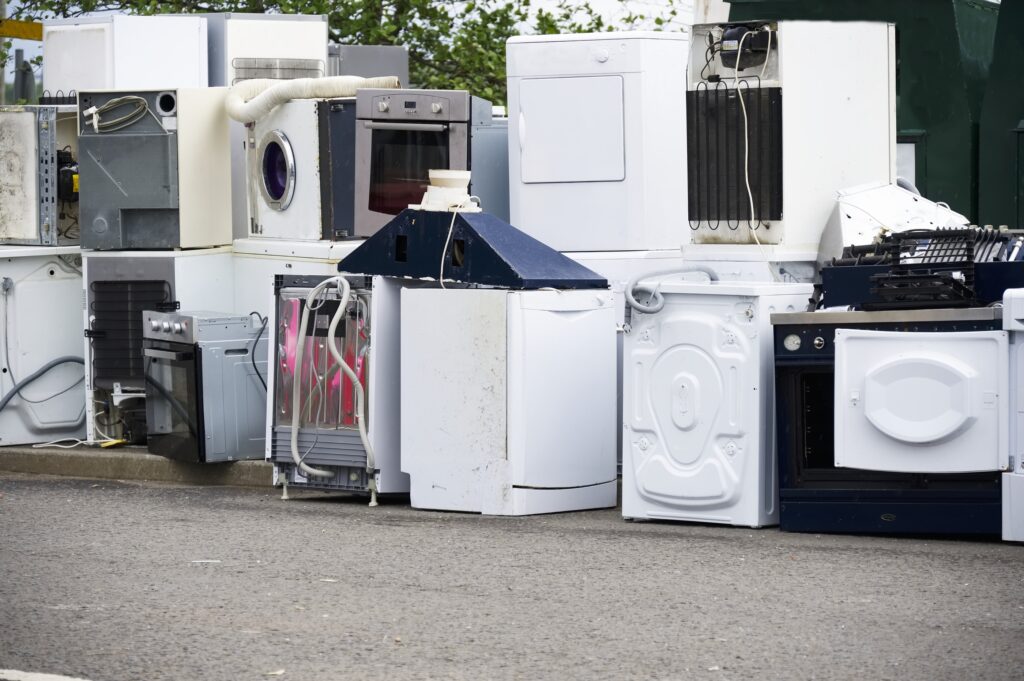
1) Vancouver Zero Waste Centre (best for residents who can transport items)
- What they accept: “Large appliances (refrigerators, freezers, air conditioners)” plus many other materials.
- Cost: Free for these items at the Zero Waste Centre (recycling drop-off is residential only).
- Hours & location: 8588 Yukon Street; posted hours updated for 2025.
- Tip: If you also have items that require fees (e.g., at the Transfer Station), the City suggests unloading those first, then taking free recyclables to the Zero Waste Centre.
2) Metro Vancouver recycling & waste centres (including Transfer Stations and Landfill)
For other materials and weighed loads, use the regional cost estimator to see current fees; charges are calculated by weight for many items. (Appliance stewardship items are typically free to recycle where accepted; transport fees or site minimums may apply in some cases.)
3) Stewardship depots under the MARR program
BC’s Major Appliance Recycling Roundtable (MARR) funds end-of-life appliance recycling through Administrative Program Fees (APFs) charged when you buy new appliances. Because the program is already funded at purchase, drop-off for included residential appliances is generally free at participating locations. As of April 1, 2025, APFs include:
- Refrigerators/freezers/dehumidifiers/A/C units: $16 (collected at point of sale)
- Washers/dryers/dishwashers/ranges/ovens, etc.: $5 (at point of sale)
These are not disposal charges; they finance the recycling system. Use MARR’s locator to find a site near you.
Pickup in Vancouver: what’s available and what you’ll likely pay
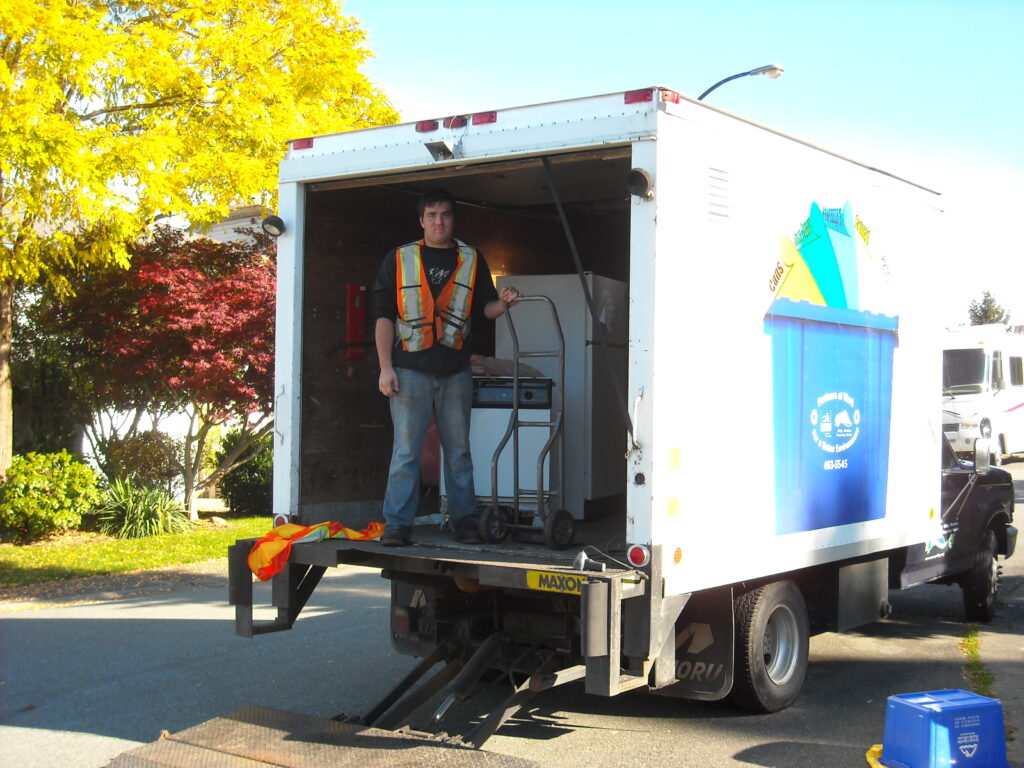
- City services: The City’s guidance directs residents to drop off large items like appliances at facilities; it does not advertise a routine curbside appliance pickup program. Always verify specific items with the Waste Wizard.
- Private haulers: Many Vancouver junk removal and recycling firms offer appliance pickup. Expect a trip fee plus a per-item charge, with higher pricing for refrigerant-bearing units (fridges, freezers, A/C) due to extra handling. Compare quotes and ask whether they deliver to MARR-participating depots and can provide disposal receipts. (Market rates vary; the City and MARR do not set pickup prices.)
- Utility programs: BC Hydro’s old Fridge Buy-Back/Fridge Recycling program has been discontinued, so do not rely on a free utility pickup.
Vancouver’s rules and good-to-know requirements

- Use approved facilities. The City instructs residents to bring large items, including appliances, to the Zero Waste Centre, transfer station, or landfill if they aren’t reusable. Fees may apply depending on the material and facility.
- Handle refrigerants properly. Many appliances (fridges, freezers, A/Cs, dehumidifiers) contain ozone-depleting substances and must be managed by certified professionals—another reason to use a MARR site or the Zero Waste Centre.
- Know what’s “electronics” vs. “appliances.” Small appliances and electronics (e.g., microwaves that aren’t built-in, laptops, power tools) often fall under Return-It/Recycling program partners and can be dropped at Return-It locations; major appliances are handled via MARR. Check item-specific guidance before you go.
- Residential only: The Zero Waste Centre’s free recycling is for residents, not businesses. Bring photo ID or proof of residence if requested.
- Plan loads: If bringing both paid and free items, the City recommends dropping paid/garbage at the Transfer Station first, then proceeding to the Zero Waste Centre for free recyclables
Step-by-step: how to dispose of a fridge, washer, or stove the right way
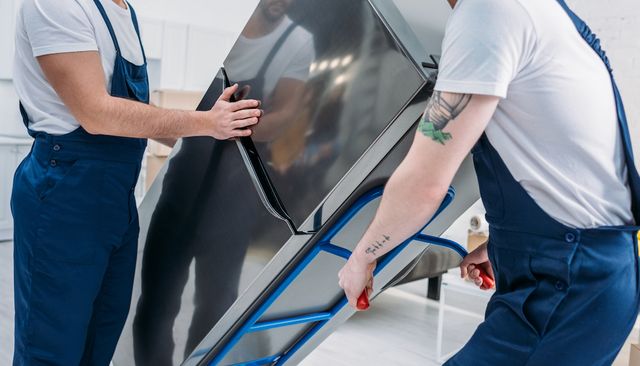
- Check if it can be reused (sell/donate) if in good condition.
- Look up your item in the City’s Waste Wizard to confirm where it belongs and if any prep is required.
- Choose drop-off or pickup.
- Drop-off: Load safely and head to 8588 Yukon St. for the Zero Waste Centre (large appliances accepted for free recycling). Bring help to unload.
- Pickup: Book a licensed hauler. Ask for proof that they recycle through MARR and request a receipt showing where your appliance went.
- For refrigerant appliances: Keep units upright. Do not attempt to remove coolant lines yourself. Certified processors will handle the refrigerant.
- Keep documentation (receipts/weight tickets): if you’re a strata or landlord who may need proof of compliant disposal.
Typical fees you might encounter (2025 snapshot)
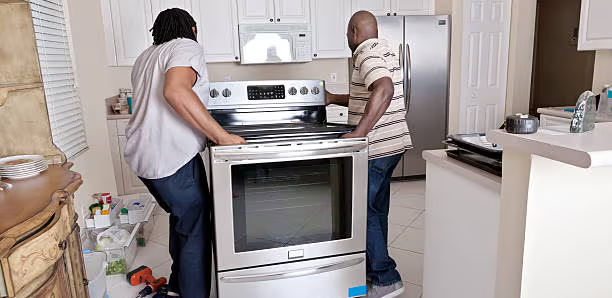
- Drop-off at Zero Waste Centre: $0 for large appliances listed as accepted for free recycling (residential).
- Regional facilities (weighed loads/other materials): Use Metro Vancouver’s Recycling & Disposal Cost Estimator to check current rates; fees are weight-based and change periodically.
- Pickup (private haulers): Variable. Expect a base trip fee plus per-appliance pricing; refrigerant units typically cost more due to regulated handling. Always confirm in writing. (No standard public rate.)
- Already-paid stewardship fees at purchase (not disposal fees): APFs fund MARR and are charged on new appliances at retailers (e.g., $16 for fridges/freezers/A/C; $5 for washers/dryers/dishwashers/ranges, effective April 1, 2025).
Practical tips before you book or drive
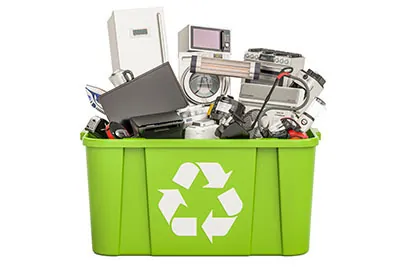
- Measure doorways and clear a safe path—appliances are heavy and awkward.
- Tape doors shut (especially for freezers/fridges) during transport; keep units upright to protect compressors and prevent spills.
- Ask haulers the right questions: Will you degas refrigerant items through a certified processor? Do you deliver to MARR sites? Can you email the drop receipt? (Responsible haulers will say yes.)
- Bundle trips: If you’re already going to the Transfer Station for a paid item (e.g., a mattress), schedule the route exactly as the City suggests: Transfer Station first, Zero Waste Centre second.
A quick note about Appliance Rescue

If you’re troubleshooting before you toss the unit, Appliance Rescue offers expert guides, appliance tips, and DIY troubleshooting advice—not repair services. If you need help planning the disposal route, have questions about drop-off vs. pickup, or want to confirm what’s accepted where, feel free to contact us, and we’ll point you to the right, regulation-compliant option.
Key resources (official)
- City of Vancouver – Waste disposal guide & Waste Wizard (how and where to dispose of items, big-item guidance).
- Vancouver Zero Waste Centre (what’s accepted for free, hours, address).
- Metro Vancouver Recycling & Disposal Cost Estimator (fees for regional facilities).
- MARR (Major Appliance Recycling Roundtable) – program info, APF rates (effective Apr 1, 2025), depot locator.
- Return-It electronics (for small appliances/electronics streams).
- RCBC FAQ (confirms BC Hydro fridge program has ended; general pickup guidance).
Final takeaway

In Vancouver, the rule of thumb is simple: drop off major appliances at approved sites (usually free), or hire a hauler who will take them there. Use the City’s Waste Wizard to confirm the right stream, leverage the Zero Waste Centre for residential drop-offs, and remember that MARR funding means you’ve already paid to recycle when you bought the appliance—so don’t pay twice unless you need pickup convenience.