
Energy Efficiency vs Performance: Which Appliance Brands Lead the Pack?
The age of “more watts = more power” is over. Today’s best appliances squeeze serious performance out of fewer kilowatt-hours, quieter motors, and smarter controls. This brand-by-brand guide walks you through how leading manufacturers stack up on efficiency and day-to-day performance across the big categories—refrigeration, laundry, dishwashing, cooking, and HVAC/heat pumps—so you can buy once and buy right.
Quick note: Appliance Rescue does not offer repair services. The site focuses on Expert Guides, Appliance Tips, and Troubleshooting Advice to help you prevent issues and get the most from your gear. Have questions or ideas for a guide? Contact us.
How to Read Appliance Efficiency Like a Pro
Before we compare brands, a short decoder ring:
- Energy Star certification: A baseline signal of above-average efficiency.
- kWh per year (refrigerators/dishwashers): Lower is better for your bill.
- IMEF & IWF (washers): Higher IMEF = better efficiency; lower IWF (gallons per cycle) = less water used.
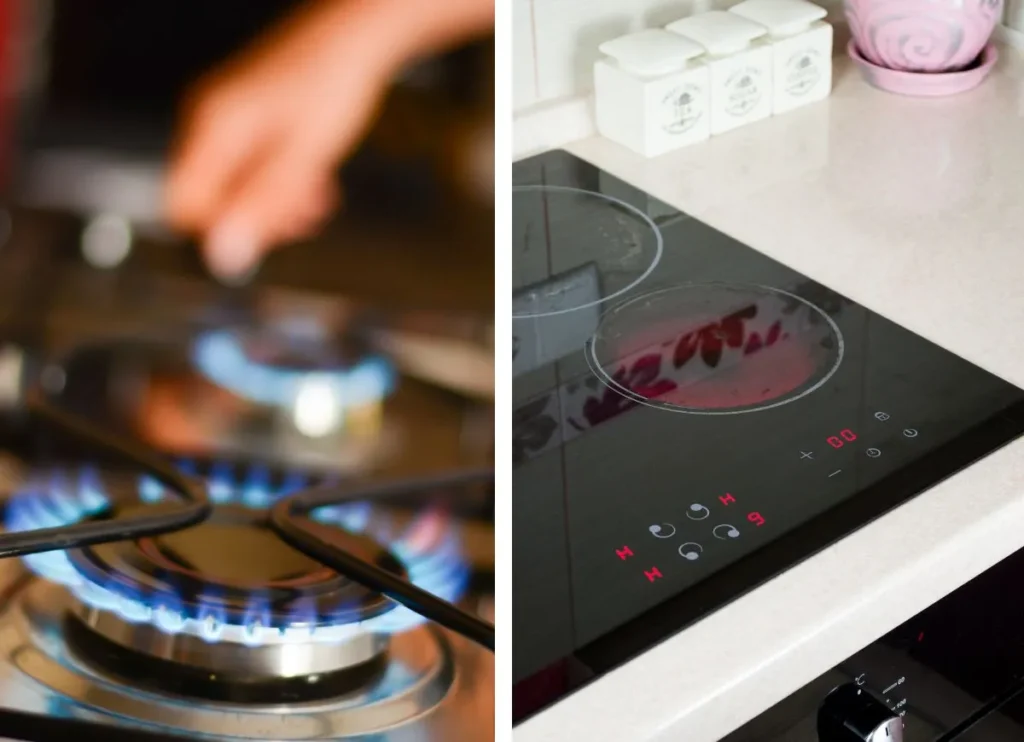
- Gas vs. electric vs. induction (ranges): Induction is the efficiency and control champ.
- Heat pump vs. vented (dryers): Heat pumps use far less energy and are gentler on fabrics.
- Noise (dBA): Matters for dishwashers, hoods, and fridges in open-plan homes.
- Inverter/variable-speed compressors & motors: Key technology behind steady temps, quiet operation, and lower energy use.
Refrigerators: Temperature Precision Without the Energy Penalty
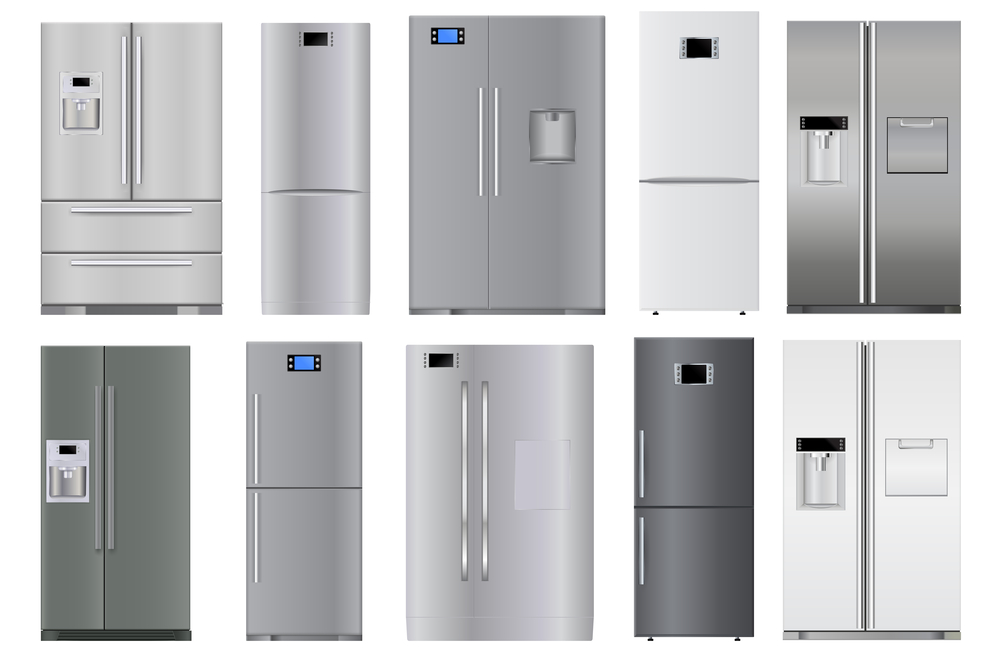
Standout Brands: LG, Samsung, Bosch, Whirlpool
- LG
Known for inverter compressors and tight temperature control. French-door and counter-depth models routinely deliver low annual kWh with stable humidity in produce drawers. ThinQ app adds smart diagnostics without being fussy. - Samsung
Excellent compartmental flexibility (FlexZone) and competitive energy numbers. Interface-forward designs and strong ice/water performance. Pay attention to door-in-door and panel-ready options if aesthetics matter. - Bosch
Smaller lineup in North America, but highly efficient counter-depth units with precise thermistors. Quiet operation and clean European styling. - Whirlpool
Workhorse reliability, easy-to-replace parts, and solid efficiency at mainstream prices. If you want no-nonsense ownership, Whirlpool is a safe bet.
Shopping tip: Look for < 600 kWh/year on full-size models and inverter compressors. Avoid oversized fridges you won’t fill; empty volume is energy you pay to cool.
Washing Machines: Water Savers That Actually Clean
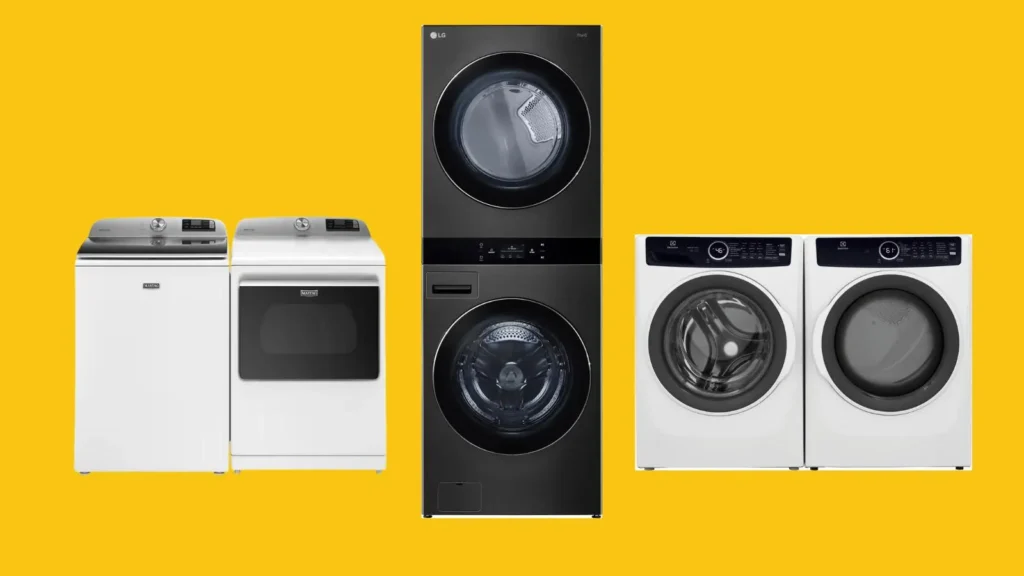
Standout Brands: LG, Samsung, Whirlpool/Maytag, Miele
- LG
Consistently high IMEF with direct-drive motors for fewer moving parts and low vibration. TurboWash options shorten cycles without guzzling water—great for busy households. - Samsung
Feature-rich (Auto Dispense, steam, allergen cycles) with strong stain performance. Make sure your loads match the sensor logic; overstuffing will negate efficiency even on smart machines. - Whirlpool/Maytag
North-American stalwarts. Maytag, a Whirlpool brand, leans “heavy-duty” with stout build quality and easy serviceability. Efficiency is competitive, especially on front-loaders. - Miele
Premium, compact-leaning washers that sip water and energy. Exceptional fabric care and long service life, though the initial cost is higher.
What to check: IMEF ≥ 2.0 and IWF ≤ 3.7 for strong efficiency. A good automatic detergent dispenser improves both cleaning and efficiency by right-sizing each dose.
Dryers: Heat Pump Wins on Efficiency
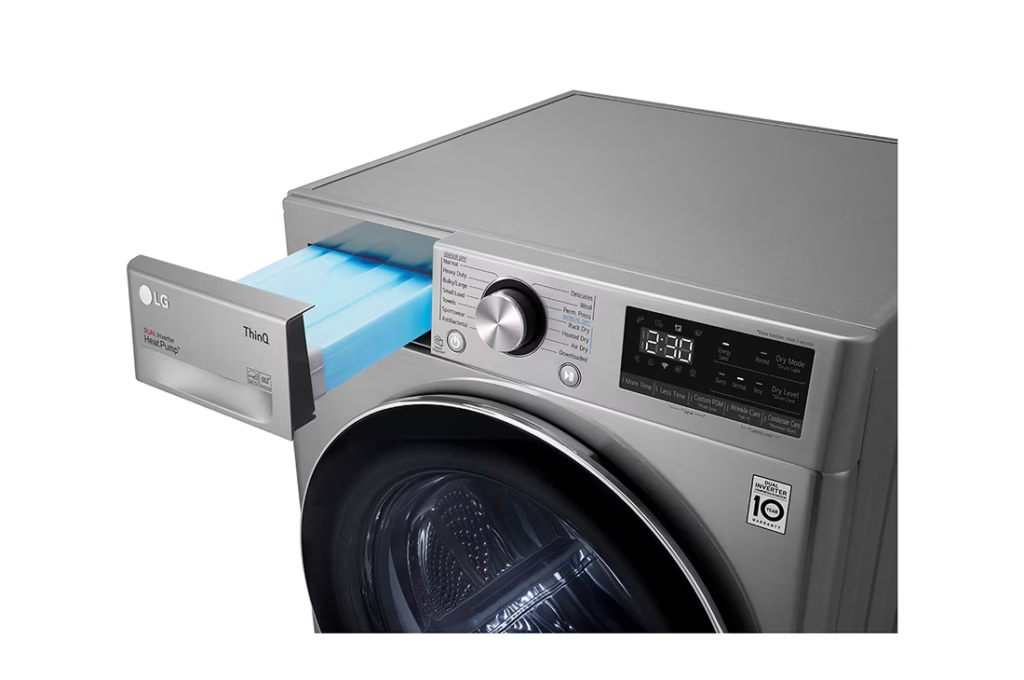
Standout Brands: Miele, Bosch, LG, Whirlpool
- Heat Pump Leaders (Miele, Bosch)
Use a closed-loop system to extract moisture at lower temps, cutting energy dramatically and reducing fabric wear. Ideal where venting is tricky. - LG & Whirlpool
Offer both vented and heat pump models. LG’s dual inverter heat pump units balance quick drying with low kWh; Whirlpool’s straightforward controls make them easy to live with.
Bottom line: If you can swing it, heat pump dryers are the most efficient choice. If you go vented, choose moisture sensors and eco modes to avoid over-drying.
Dishwashers: Quiet Efficiency with Real-World Drying
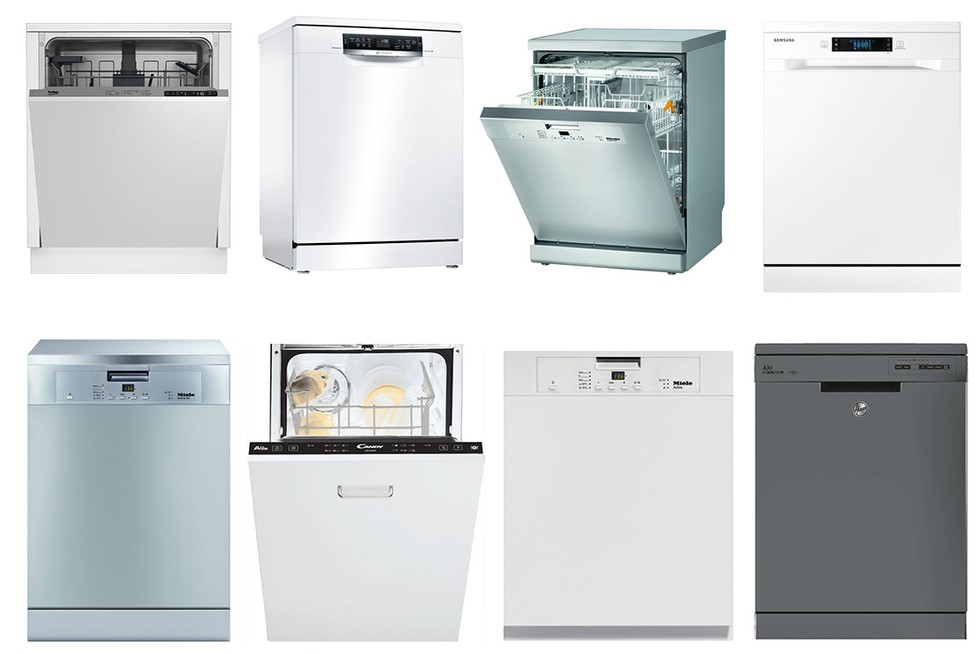
Standout Brands: Bosch, Miele, KitchenAid, Samsung
- Bosch
The benchmark for quiet, efficient dishwashers. CrystalDry/zeolite models deliver excellent drying—even on plastics—with very low energy and water use. - Miele
Premium racking flexibility and superb build quality. Eco programs are frugal on both water and kWh. - KitchenAid
Strong cleaning power, robust racks, and reliable heated dry. Noise is a touch higher than Bosch/Miele, but competitive pricing. - Samsung
Feature-rich (AutoRelease door, ZoneBooster) with sleek styling and solid efficiency numbers.
What to check: Noise ≤ 44 dBA, Energy Star, and a dedicated plastics or eco-dry option if you run mixed loads.
Cooking: Induction and Efficient Ovens
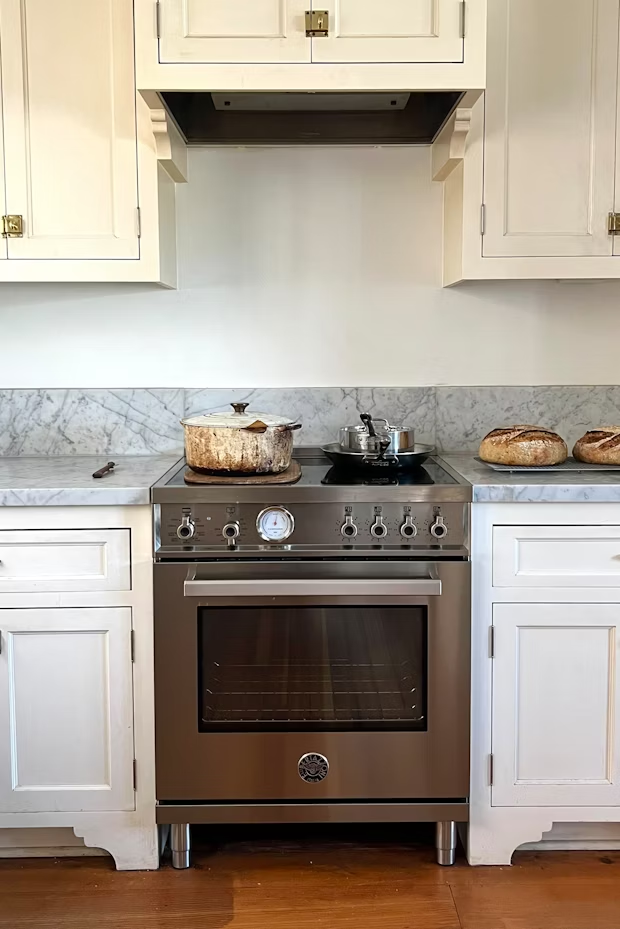
Standout Brands (Ranges/Cooktops): Bosch, GE Profile/Monogram, Samsung, LG
- Induction Cooktops (Bosch, GE Profile, Samsung, LG)
Fast, safe, and remarkably efficient, converting more energy into heat in the pan with less ambient loss. Precision low-simmer control is a hidden efficiency gain. - Ovens
Look for convection or true European convection for even heat at lower temps and shorter cook times. Some brands integrate air-fry modes that leverage high-velocity convection rather than brute heat.
Pro tip: A double-wall oven is great for big cooking days, but for most households, a single oven plus countertop combi-steam or air-fry device uses less total energy year-round.
Heat Pumps & Mini Splits: Whole-Home Efficiency Leaders
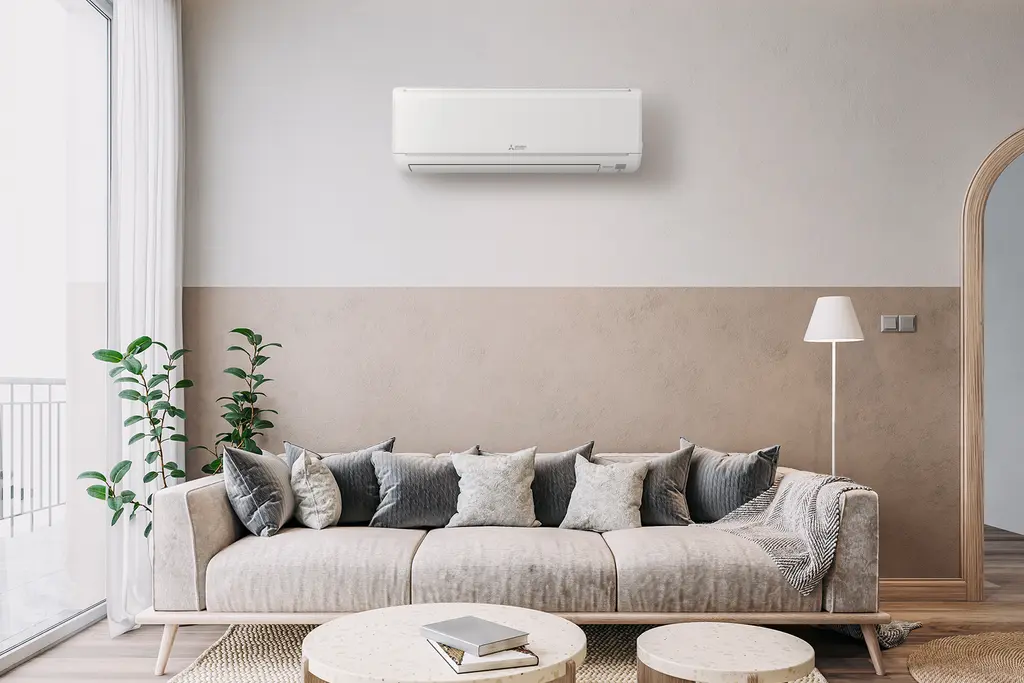
Standout Brands: Mitsubishi Electric, Daikin, Fujitsu, LG
Cold-climate heat pumps have matured. Variable-speed compressors, smart defrost cycles, and improved refrigerants deliver high HSPF/SEER2 while keeping rooms comfortable. For small spaces or additions, a ductless mini split from any of these brands usually beats space heaters or window ACs on both comfort and energy use.
Brand Snapshots at a Glance
- LG – High efficiency across categories, great motors/compressors, strong smart features.
- Samsung – Flexible storage (fridges), feature-forward washers/dishwashers, sleek design.
- Bosch – Quiet, efficient dishwashers and fridges; minimalist European engineering.
- Whirlpool/Maytag – Reliable, serviceable, and efficient at mainstream prices.
- Miele – Premium efficiency and longevity; especially strong in laundry and dishwashing.
- GE Profile/Monogram – Excellent induction options and thoughtfully designed cooking suites.
- Mitsubishi/Daikin/Fujitsu (HVAC) – Top-tier heat pump efficiency and comfort control.
Performance Isn’t Just Numbers: Real-Life Factors to Weigh
- Cycle Times & Usability
Ultra-eco cycles can be long. Look for quick-wash or turbo modes that keep energy reasonable. - Noise & Vibration
Open-plan spaces favor brands with low dBA ratings and inverter motors. - Capacity & Layout
Overbuying capacity wastes energy. Prioritize smart rack design and adjustable shelving over sheer cubic feet. - Serviceability & Parts
Mainstream brands (Whirlpool/Maytag, GE) often have easier parts access. Premium brands deliver longevity but may have longer wait times for specialty parts. - Smart Features That Actually Help
Auto-dose, leak detection, load sensing, and energy monitoring are useful. Gadgetry for gadgetry’s sake is not.
The Efficiency Hall of Fame: Features Worth Paying For
- Inverter/Variable-Speed Compressors & Motors
- Induction cooktops for precision and low waste
- Heat pump dryers and cold-climate heat pumps
- True convection ovens with good fan design
- Auto-dose detergent systems on washers
- Zeolite/phase-change drying in dishwashers
- Tight door gaskets & thermal insulation on fridges and ovens
Ownership Tips to Maximize Real-World Savings
- Level and load correctly. Uneven washers waste energy and wear parts faster.
- Clean filters and coils. Fridge condenser coils and dishwasher filters are low-effort, high-payoff maintenance.
- Use eco cycles overnight. Cheaper off-peak electricity plus lower heat output.
- Right-size your appliance. A 36" fridge for a two-person household is rarely efficient.
- Induction + lidded cookware. Faster boils, less steam, cooler kitchens.
- Heat pump dryer: clean lint screens and condenser. Keeps efficiency high and drying times short.
For more step-by-step guidance, browse Appliance Rescue—again, it’s a hub for Expert Guides, Appliance Tips, and Troubleshooting Advice, not a repair service marketplace. If you’d like a specific comparison or a how-to guide, Contact us and suggest a topic.
Quick Buyer’s Checklist
- Target Energy Star models; confirm key metrics (kWh/year, IMEF/IWF, dBA).
- Favor inverter or variable-speed tech.
- Choose induction for cooktops, heat pump for dryers, and HVAC.
- Evaluate racking/layout over raw capacity.
- Consider the service network and parts availability in your area.
- Don’t ignore noise—you’ll live with it daily.
- Use resources like Appliance Rescue for tips to run your machines efficiently and prevent issues.
Final Word
There’s no single “best” brand for every category, but patterns are clear. Bosch dominates quiet, frugal dishwashing; LG and Samsung deliver efficient, tech-savvy refrigeration and laundry; Miele offers premium longevity with miserly energy use; and GE Profile is a top pick for induction cooking. Match these strengths to your home’s needs, right-size the appliance, and you’ll see lower bills without sacrificing performance. And if you’re torn between two models, a little setup and maintenance—often a five-minute checklist—is the difference between “good on paper” and “great in your kitchen.”