

BC Dishwasher Troubles? How to Spot and Fix Hard Water Buildup
If your dishwasher has quietly shifted from “set-and-forget” to “why is everything cloudy,” you might be dealing with hard water. Many British Columbia households—especially those on wells or in communities with mineral-rich aquifers—encounter water that carries extra calcium and magnesium. Those minerals don’t hurt you, but they do love to cling to dishes, glassware, and the inside of your dishwasher. This guide explains how to confirm hard water is the culprit, what to do about it today, and how to prevent the problem from returning.
Quick note: Appliance Rescue does not offer repair services. We publish Expert Guides, Appliance Tips, and Troubleshooting Advice so you can solve common issues safely and confidently. Need to reach our editorial team? Contact us.
What is “hard” water—and why dishwashers care
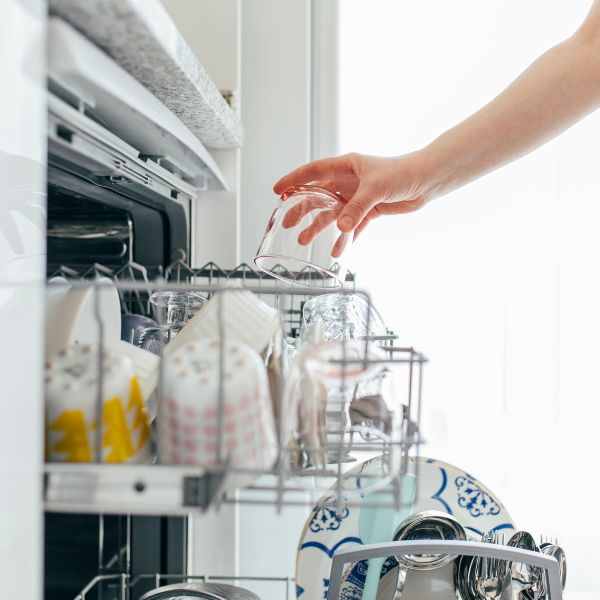
“Hardness” refers to dissolved calcium and magnesium in your water. When water is heated and evaporates during a wash or dry cycle, those minerals get left behind as a chalky residue called limescale. Over time, this residue:
- Mutes the sparkle of glassware and stainless steel
- Clogs fine passages (spray arms, pumps, filters)
- Insulates heating elements, reducing efficiency
- Forces the machine to work harder for the same results
Even a little extra hardness can overwhelm modern low-phosphate detergents, so the symptoms tend to show up first in your dishwasher.
Classic signs of hard water in BC kitchens
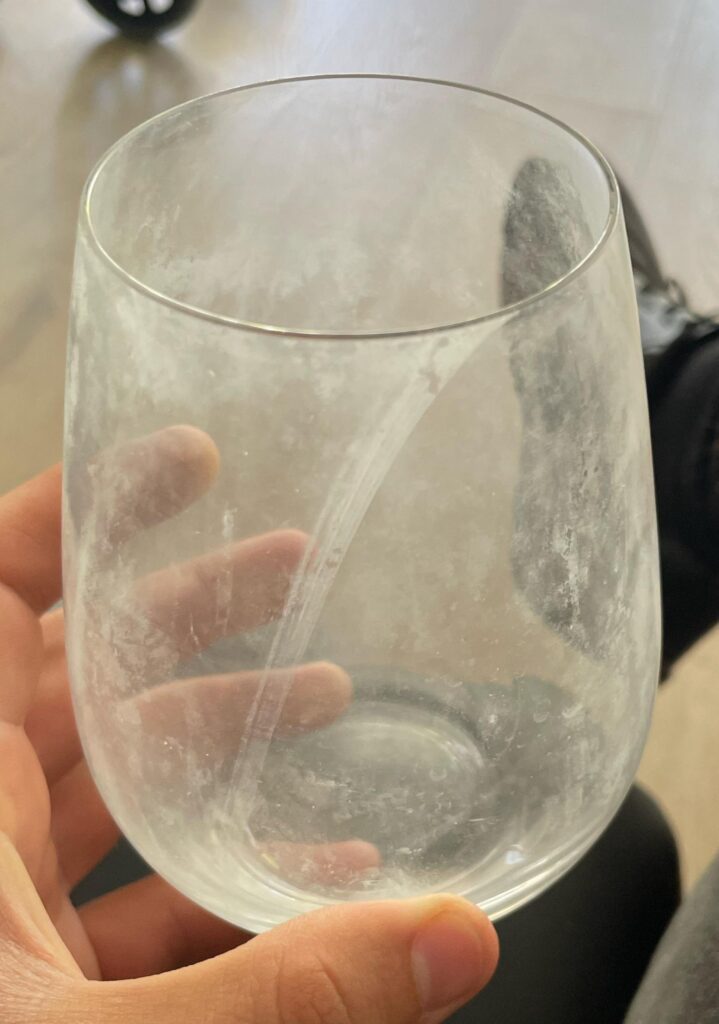
If you’re seeing two or more of the signs below, you’re very likely dealing with mineral buildup rather than a failing appliance:
- Milky film or white “freckles” on glasses
Looks like you forgot to rinse—but it doesn’t budge with a second wash. - Iridescent rainbow sheen on plates
A subtle oil-slick look that wipes off with vinegar or citric acid. - Rough or chalky feel on dishes
Run your finger across a “clean” glass; it feels squeaky-gritty. - White crust at the bottom of the tub
Check around the drain, the heating element (if visible), and the door gasket. - Clogging spray arms
Jets sputter or stall; a toothpick or a pin reveals plugged holes. - The detergent does not dissolve fully
Powder cakes in the dispenser; pods leave gummy traces. - Cloudy interior window (if your model has one) or dull stainless steel walls
A hazy film that returns quickly after manual cleaning. - Longer cycles, weaker drying
Limescale on sensors and the heating system can trick the machine or reduce heat transfer.
Quick confirmation: simple ways to test
- Test strips. Inexpensive hardness test strips (often labelled in ppm or grains per gallon) give you a 30-second read at the tap.
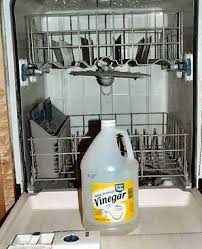
- Vinegar wipe test. Dab white vinegar on a cloudy glass; if the haze disappears quickly, it’s mineral residue.
- Faucet aerator check. Unscrew an aerator; gritty white flakes = limescale.
- Neighbourhood clues. If you’re on a well or in a community known for mineral-rich water, assume moderate hardness unless testing says otherwise.
Immediate fixes you can do today
1) Tune rinse aid correctly
- Turn it up. Increase the rinse-aid dosage one notch at a time until spotting subsides.
- Refill monthly. A low reservoir is the most common cause of new spotting after a streak of good results.
2) Choose a hard-water-friendly detergent
- Prefer enzyme-rich detergents (gels or powders are fine) that include chelating agents like citrate.
- Avoid mixing brands and forms (e.g., half-dissolved powders plus pods); consistency helps your settings “stick.”
3) Run a descaling cycle (citric acid)
- Place 1–2 tablespoons of food-grade citric acid (or a dishwasher descaler product) in the empty machine and run a hot cycle.
- For heavy buildup, repeat weekly for a month, then monthly for maintenance.
- Tip: Some manufacturers sell branded cleaners; these are essentially measured citric acid with surfactants.
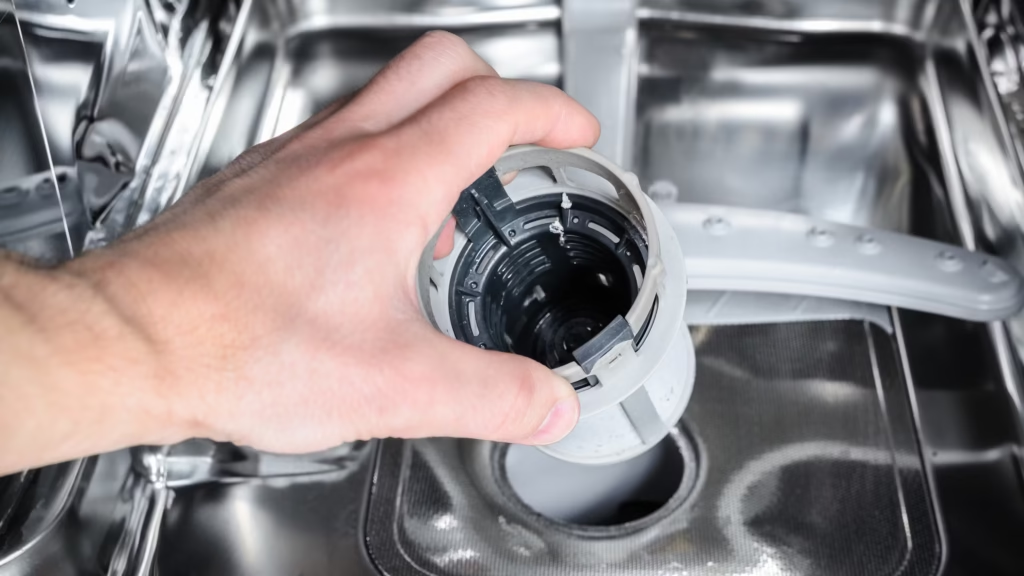
4) Clean the filter and spray arms
- Filter: Remove, soak in warm soapy water, brush gently, and rinse.
- Spray arms: Pop them off if your model allows. Soak in warm water with a spoon of citric acid; use a wooden toothpick to clear jets—avoid metal pins that can widen holes.
5) Verify water temperature
- Many detergents need 49–60°C (120–140°F) feed water. If your hot water is cooler, boost the heater or enable your dishwasher’s internal “sanitize” or “extra hot” setting.
A word on vinegar: brief contact on dishes is fine, but don’t leave strong vinegar sitting on rubber gaskets or soft metals; long soaks can be hard on seals and trim.
Settings that make a real difference

- Soften the water (if your model supports it).
Some dishwashers include a built-in softener with a salt reservoir. If yours has one, set the hardness according to your test result and keep the reservoir filled with dishwasher salt (not table salt). - Enable “extra dry” with rinse aid.
Hard water leaves less-than-perfect sheeting; higher heat plus rinse aid improves beading and reduces spots. - Avoid short “express” cycles for full loads.
These cycles don’t provide enough contact time for enzymes and chelators to work in hard water.
Longer-term solutions for BC homes
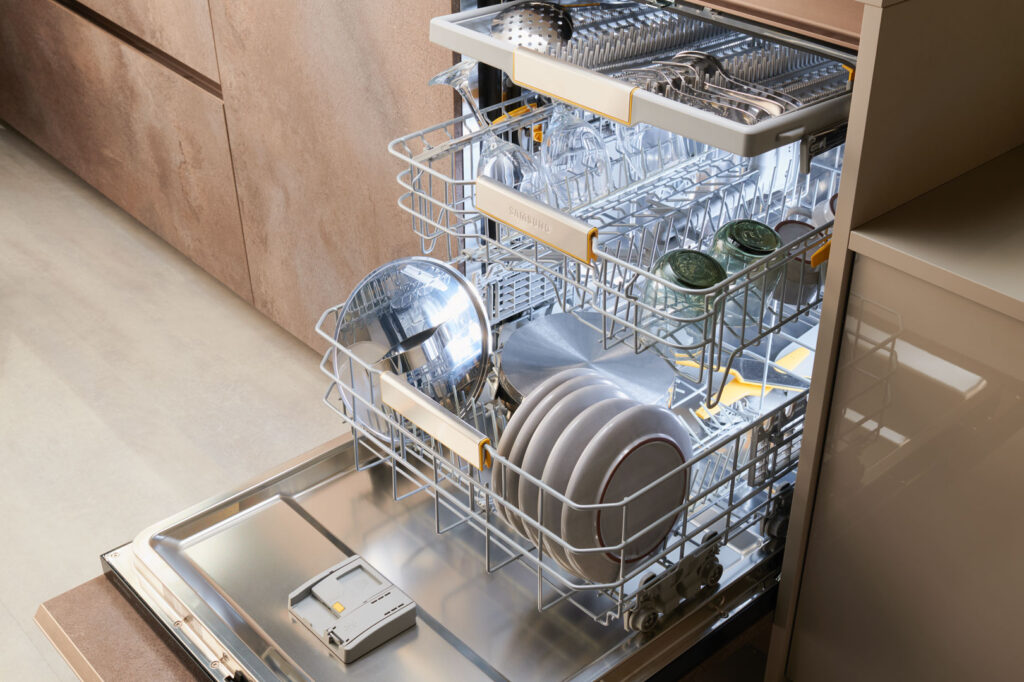
Option A: Point-of-use softening
- What it is: A compact softener or conditioner on the hot-water line serving your dishwasher.
- Pros: Lower cost than whole-home; targeted results.
- Cons: Limited flow; still leaves hardness at other taps.
Option B: Whole-home water softener
- What it is: Ion-exchange system that swaps calcium/magnesium for sodium or potassium.
- Pros: Protects all fixtures and appliances, offers better showers, and less soap use.
- Cons: Higher upfront cost; occasional salt refills and regeneration cycles.
Option C: Template-assisted crystallization (TAC) / “conditioners”
- What it is: Media that changes how minerals behave so they don’t stick as easily.
- Pros: Low maintenance, salt-free.
- Cons: Performance varies with water chemistry; true softening (ion exchange) is more predictably effective for severe hardness.
If you’re renting or can’t install equipment, a monthly citric-acid cleaning plus optimized detergent and rinse aid will still keep your dishwasher in good shape.
Maintenance schedule you can actually follow
- Every load: Use rinse aid; choose a high-efficiency detergent.
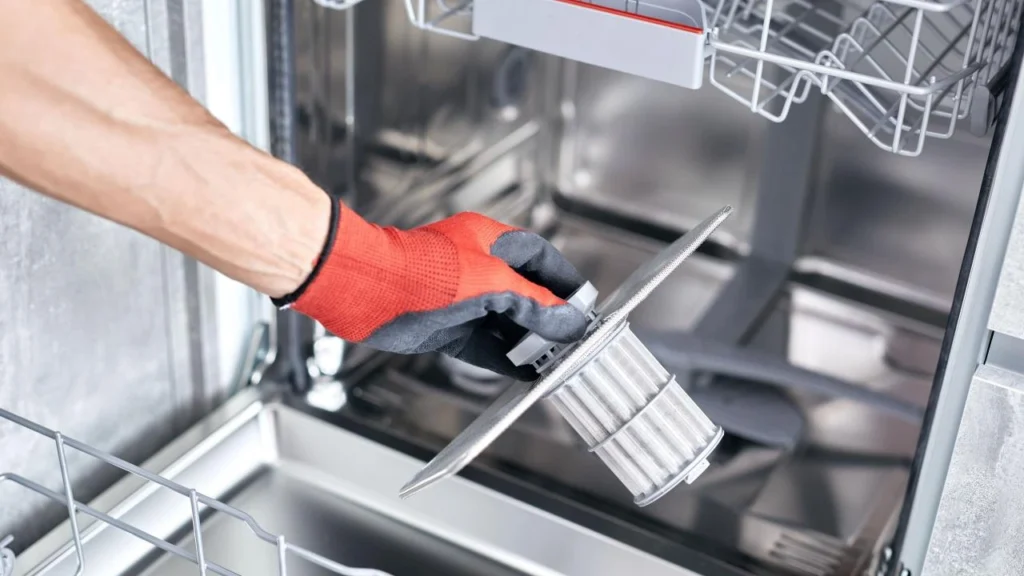
- Monthly: Clean the filter; run a citric-acid or manufacturer’s descaling cycle.
- Quarterly: Inspect spray arms and door gasket; wipe the tub and interior seam lines.
- Twice per year: Check water hardness (it can change seasonally, especially in wells); adjust settings as needed.
When it looks like a repair—but isn’t
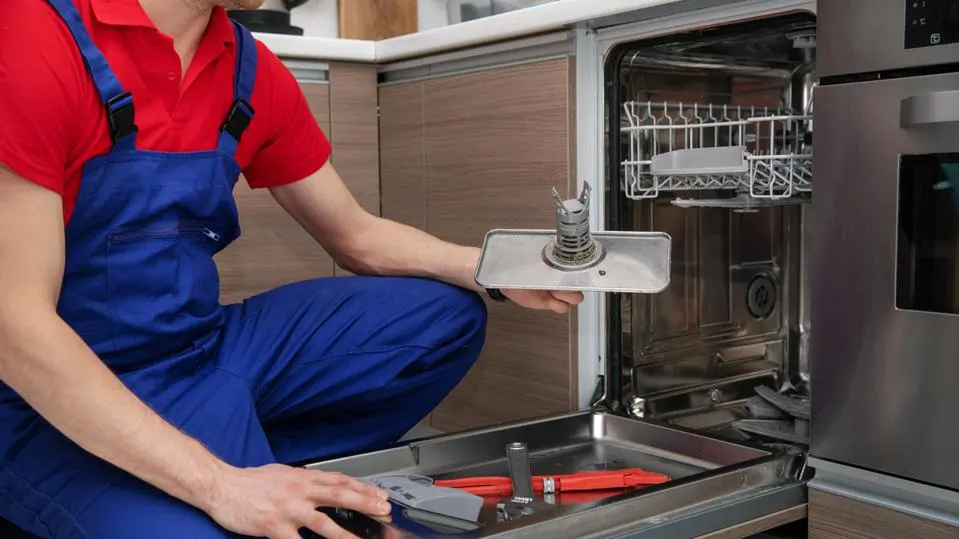
Hard water can mimic mechanical failures. Before assuming a part has failed, rule out mineral buildup if you notice:
- Poor spray or dead zones → Often clogged jets rather than a bad pump.
- Slow heating or poor drying → Limescale on the heating element or sensor.
- Detergent door not opening “right” → Caked powder or residue around the latch.
If you’ve completed the cleaning/descaling steps and symptoms persist, then it’s time to consider component wear. For step-by-step diagnostics and non-repair troubleshooting, browse the guides on Appliance Rescue. Have a question about a guide? Contact us—again, we’re an advice resource, not a repair service.
BC-specific tips and nuances
- Municipal vs. well water: Municipal supplies can fluctuate seasonally; private wells often trend harder. Retest when dishes start spotting again after a long “good period.”
- Stainless tumblers and etched glass: In prolonged hard-water conditions, glassware can become etched (permanent microscopic pitting). Descaling stops further damage, but it won’t “polish” etched glass back to clear.
- Energy-saving cycles: Great for efficiency, but in hard water, they may need a helper—use “auto” or “normal” with rinse aid, and save “eco” for lightly soiled loads.
Troubleshooting checklist (print-friendly)
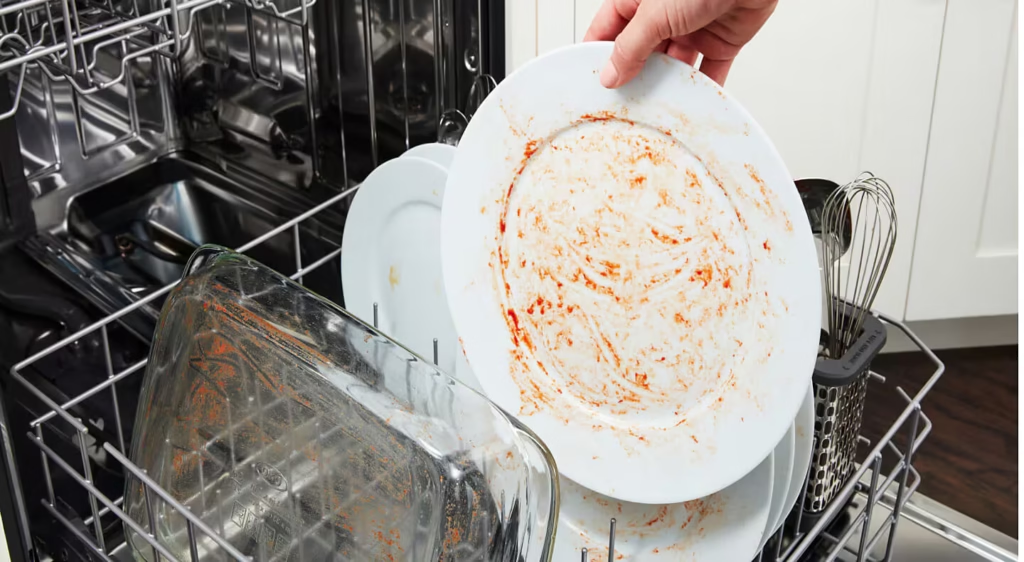
- Test water hardness (strip)
- Increase rinse-aid dose by one step
- Switch to an enzyme-rich detergent suited for hard water
- Descale with citric acid (empty machine, hot cycle)
- Clean filter and spray arms; clear jets
- Verify inlet water is at least 49°C / 120°F
- If available, set the dishwasher’s built-in softener and refill the dishwasher salt
- Consider point-of-use or whole-home softening if hardness is moderate to high
Keep this routine, and you’ll usually see clearer glasses in 2–3 cycles.
Final word
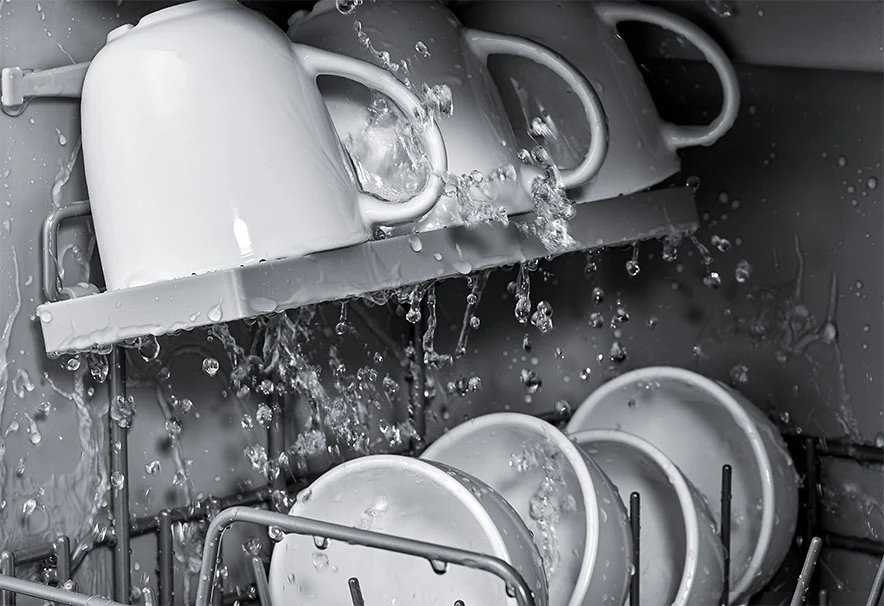
Hard water is a chemistry problem, not a personality flaw in your dishwasher. With a few setting tweaks, the right detergent, and a simple descaling habit, you can restore sparkle and keep your machine efficient. And if you want step-by-step walkthroughs tailored to common models, explore our guides at Appliance Rescue. We don’t service machines, but we’re happy to help you troubleshoot. Questions about a guide or a tip? Contact us.